Author: cagiautoglass

  • Lease Return Auto Glass in Henderson: How Chips, Cracks, and Pitted Glass Can Cost You at Turn-In

    Lease Return Auto Glass in Henderson: How Chips, Cracks, and Pitted Glass Can Cost You at Turn-In

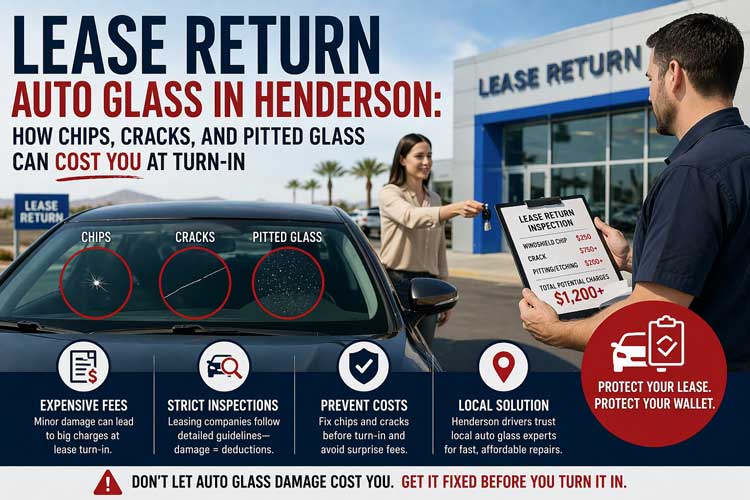
    Lease Return Auto Glass in Henderson: How Chips, Cracks, and Pitted Glass Can Cost You at Turn-In. If you are getting close to the end of a lease in Henderson, there is a good chance you are already thinking about mileage, tires, and that one little dent in the bumper. What a lot of drivers miss is the glass. Lease return auto glass can absolutely affect what you owe at turn-in, and official lease-end guides from major finance companies specifically call out windshield and window damage during wear-and-use inspections.

    Lease Return Auto Glass in Henderson 

    At CA Auto Glass, we have been helping Southern Nevada drivers for over 30 years, with 4 locations in Las Vegas, affordable pricing, and great quality work. We truly pride ourselves with excellence on auto glass repairs, and that matters when you are trying to avoid surprise charges on a leased vehicle. 

    This guide is built around one question: what should Henderson drivers fix before lease turn-in so chips, cracks, and pitted glass do not cost more than they should?

    Why lease-return auto glass matters more than most drivers think

    Lease-end inspections are not just looking for major collision damage. They are also checking for condition issues that can be billed as excess wear and use. Ford Credit’s wear-and-use card asks whether the vehicle is free of glass damage like chips and cracks, and it says excess wear-and-use charges may result if needed repairs are not completed before the vehicle is returned. Toyota Financial, Mazda Financial Services, and Volkswagen all publish similar lease-end guidance that specifically addresses windshield and glass condition. 

    That matters even more in Henderson. The City of Henderson says the desert climate brings about 300 days of sunshine per year, and summer temperatures can exceed 115°F. That kind of heat is hard on windshields, seals, and any chip that has been sitting there longer than it should. 

    If you want a broader local-weather refresher before your inspection, our article on Las Vegas Auto Glass: How the Desert Climate Affects Your Car’s Windows pairs well with this topic.

    Not every lease bank treats glass exactly the same

    This is one of the most important things to understand before you spend money. Lease-end standards vary. Mazda Financial Services says its examples are general guidance only and that state law and the terms of your lease can change your rights and obligations. In other words, your exact lease agreement still matters. 

    Still, the published rules are helpful because they show what inspectors are looking for:

    • Ford Credit says all glass damage is chargeable; up to two chips or cracks per panel that each fit within a 1-inch circle are treated as repair charges, and all other cases fall into full replacement charges. 
    • Volkswagen says a single windshield chip without spidering counts as normal wear, but multiple chips, cracks, or pits measuring more than 1/8 inch count as excess wear and use. 
    • Mazda Financial Services lists windshield cracks, stars, bullseyes, and damaged, broken, or poorly installed glass as excess wear examples. 
    • Toyota Financial Services lists windshield cracks, stars, or bull’s-eyes, along with damaged, broken, or non-factory tinted glass, as items that may be considered excessive wear and use. 

    That is why “I only have a small chip” is not always enough information. The exact size, location, and type of damage matter, and so does the lease bank behind the car.

    The 6 glass problems most likely to cost you at turn-in

    1. Small chips that are still visible

    A fresh rock chip can look minor, but at lease return it is still an inspection item. Depending on the lender, even a small chip can be chargeable, and if it grows before turn-in you may go from a repairable issue to full replacement territory. Ford’s guide is especially strict here, while Volkswagen is a little more forgiving on a single chip without spidering. 

    If you are not sure whether your damage is still repairable, see Windshield Repair vs. Replacement: Which Option Saves You More?.

    2. Cracks, stars, and bull’s-eyes

    This is the easy one. Mazda and Toyota both explicitly list windshield cracks, stars, or bull’s-eyes as excess wear examples. If you already know the glass is cracked, it is smart to treat that as a real turn-in issue, not something to leave for the lease company to sort out later. 

    3. Pitted glass that looks worn in bright sun

    Pitting is one of the more frustrating lease-return problems because it often sneaks up on drivers. The windshield looks “fine” until bright sunlight or nighttime glare reveals that the surface is full of tiny pits and wear marks. Volkswagen specifically flags multiple chips, cracks, or pits over 1/8 inch as excess wear. On a Henderson vehicle that has spent years in desert sun, pitted glass can absolutely become part of the conversation at turn-in. 

    For a simple maintenance habit that helps you catch this stuff sooner, read Why Regular Auto Glass Inspections Save You Money in the Long Run.

    4. Poorly installed or sloppy old windshield replacements

    This is an underrated one. Mazda Financial Services specifically includes poorly installed glass in its excess wear examples. That means a bad old windshield job can still cost you at lease return even if the glass is not currently cracked. Uneven molding, ugly adhesive, bad trim fit, or obvious install shortcuts can make the vehicle look like it needs more reconditioning. 

    If you are wondering how to spot quality work before turn-in, our guide on Safety & Longevity in Las Vegas Auto Glass Replacements is a useful follow-up.

    5. Non-factory tint or glass changes that do not match the lease standard

    Toyota Financial Services lists non-factory tinted glass as a possible excess wear item, and Volkswagen calls out improperly tinted windows as excess wear and use. So if a previous owner, shop, or even you added tint in a way that does not meet the lessor’s standard, that can come back at turn-in. 

    6. Windshield-camera problems on newer leased vehicles

    A lot of leased cars are newer vehicles with ADAS features. NHTSA says lane-departure warning systems use a camera to detect when a vehicle veers out of its lane, and IIHS notes that windshield repairs often make it necessary to calibrate crash-avoidance cameras and sensors. So if your leased vehicle has already had windshield work and there is now a warning light, a loose cover near the mirror, or a calibration issue, do not assume that is unrelated to turn-in. It can affect how the car is inspected and what work it needs next. 

    If that sounds familiar, our article on ADAS Windshield Calibration in Las Vegas is worth reading before you hand the keys back.

    Why power windows can matter at lease turn-in, too

    Lease-return problems are not always limited to the windshield itself. Ford’s checklist asks whether all electrical components are functioning properly, and Toyota’s wear-and-use FAQ includes inoperative, malfunctioning, or broken parts or equipment as issues that can matter at lease-end. If a side window is slow, crooked, or does not seal fully, that is not something you want to discover during the final inspection. 

    That is one reason a quick pre-turn-in check matters. Our internal post How Often Should You Check Your Car Windows and Windshield Seals? is a good place to start if you want a fast self-inspection routine.

    The smartest move: inspect early, not at the last minute

    The official guidance here is surprisingly consistent. Ford says a self-assessment before the final inspection gives you extra time to correct issues and make repairs. Mazda says repairs made after a pre-inspection may eliminate or reduce charges. Toyota recommends scheduling a courtesy pre-inspection within 60 days before return so you can fix damage and avoid surprises at lease-end. 

    That is the real financial takeaway. You do not want your first serious look at the glass to happen when the car is already being turned in.

    A practical Henderson timeline looks like this:

    • 60 days out: schedule or request a pre-inspection if your lease bank offers one. 
    • 30–45 days out: get local repair estimates on anything flagged, especially windshield damage or side-glass issues.
    • Before turn-in: keep receipts if you had work done; Toyota specifically advises keeping repair receipts if you choose to fix damage before returning the vehicle. 

    Repair it now or let the lease company bill you later?

    There is no one-size-fits-all answer, but the official lease-end guides make one thing clear: they want you to inspect early because that gives you the chance to compare your options before the car is returned. Ford says charges may result if needed repairs are not completed before return, Mazda says repairs after pre-inspection may reduce or eliminate charges, and Toyota says pre-inspection helps avoid surprises and gives you detailed estimated fees right away. 

    That means the smart move is usually simple: get the numbers before turn-in. Compare the likely lease-end charge to a local professional repair or replacement quote. Sometimes the fix is small and obvious. Sometimes it is better to leave minor wear alone. But you cannot make that call intelligently if you wait until the last week.

    Helpful non-competitor resources

    If you want to see the official standards for yourself, these are worth bookmarking:

    Why Henderson drivers choose CA Auto Glass before lease turn-in

    At CA Auto Glass, we understand that lease-return work is not just about fixing glass. It is about helping you avoid surprise charges while keeping the car safe, presentable, and easy to hand back. With over 30 years in business, 4 Las Vegas locations, affordable pricing, and great quality work, we help Henderson drivers figure out what is worth repairing, what needs replacement, and what can probably wait.

    And because lease-return timelines can get tight, we focus on clear recommendations instead of upselling. If it is still a repair, we will tell you. If the glass is too damaged, poorly installed, or too pitted to be a smart repair candidate, we will tell you that too.

    Final takeaway

    Lease return auto glass in Henderson is one of those things that sounds minor until it becomes an itemized charge. Chips, cracks, pitted glass, sloppy old windshield replacements, non-factory tint, and even power-window problems can all matter more at turn-in than drivers expect. Official lease-end guides from Ford, Mazda, Toyota, and Volkswagen all show the same big idea: inspect early, fix what makes sense, and do not wait for the last day to find out what the lease bank thinks. 

    If your lease-end date is getting close, now is the time to have the glass looked at—before Henderson sun, pitting, or a small crack turns into a much bigger bill.
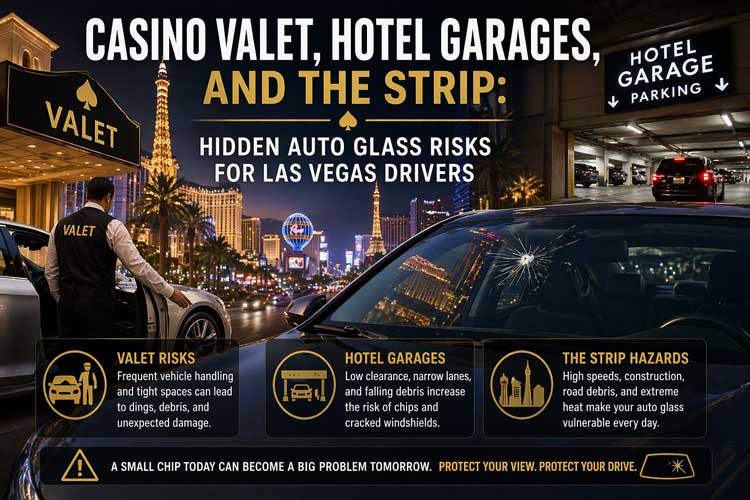
  • Casino Valet, Hotel Garages, and the Strip: Hidden Auto Glass Risks for Las Vegas Drivers

    Casino Valet, Hotel Garages, and the Strip: Hidden Auto Glass Risks for Las Vegas Drivers

    Casino Valet, Hotel Garages, and the Strip: Hidden Auto Glass Risks for Las Vegas Drivers. The Las Vegas Strip is great at making cars look good. It is not always great at keeping their glass that way.

    A lot of drivers think windshield damage mostly comes from freeway rocks and construction debris. That is true. But the Strip brings a different set of problems: tight valet lanes, cramped hotel garages, hard-water spotting, heat-soaked windshields, and side glass that takes more abuse than people realize. In a city known for abundant sunshine and triple-digit summer temperatures, those “small” issues can turn into expensive repairs fast.

    Casino Valet, Hotel Garages, and the Strip: Hidden Auto Glass Risks for Las Vegas Drivers

    At CA Auto Glass, we have been helping Las Vegas drivers for over 30 years, with 4 locations across Las Vegas, plus mobile service when bringing the car in is not convenient. We are known for affordable pricing, great quality work, and a team that truly prides itself with excellence on auto glass repairs

    This guide focuses on something a little more specific than the usual chip-and-crack article: the hidden auto glass risks that show up around casino valet stands, hotel garages, and Strip parking.

    Why the Strip is harder on auto glass than most drivers expect

    The Strip creates a strange mix of conditions for your glass. One minute the windshield is baking in direct sun at the valet curb. The next minute the car is in a cooler garage. Then it is back out into bright heat again. In Las Vegas, where summer temperatures regularly hit the triple digits, that repeated heat-and-cool cycle is rough on chips, seals, adhesives, and already-tired glass. 

    Then there is the water. The Las Vegas Valley Water District says local hard water comes from dissolved minerals—mainly calcium and magnesium. That matters because quick rinses, valet wipe-downs, sprinkler overspray, and garage drips can leave mineral spotting on the windshield and side glass, especially if the car sits before the water is cleaned off properly. 

    Newer vehicles add another layer to the problem. NHTSA says some lane-departure warning systems use a camera to detect when a vehicle drifts out of its lane, and IIHS notes that lane-departure and lane-departure-prevention systems also rely on cameras to track the car’s position in the lane. That means windshield clarity, correct replacement glass, and proper calibration matter more than they used to—especially on late-model luxury cars that spend a lot of time on or near the Strip. 

    The hidden auto glass risks in valet lanes and hotel garages

    1. Heat-soaked windshields make existing chips worse

    A tiny chip that seems harmless during the day can become a much bigger problem after hours of direct heat. Add a quick blast of cold A/C when you get back in the car, and that little damage point is under even more stress. The Strip does not create those chips by itself, but it absolutely helps them spread faster once they are there. 

    For the broader desert-climate side of that issue, see Las Vegas Auto Glass: How the Desert Climate Affects Your Car’s Windows.

    2. Hard-water spots can quietly ruin a “clean” windshield

    A lot of Strip drivers assume their glass is dirty when the real problem is mineral buildup. Hard-water spotting can leave a windshield looking hazy, streaky, or sparkly under direct sun and LED lighting. It is especially noticeable at valet drop-off areas, in garage lighting, and at night when bright signs hit the glass from odd angles. Las Vegas hard water is a real nuisance issue, even though it is not a health problem. 

    3. Tight garage turns and close parking increase side-glass risk

    This is one of the quieter risks. In resort garages, a lot of glass damage happens at low speed: a mirror clips a post, a passenger opens a door into a wall, another driver swings a door too wide, or luggage gets dragged too close to a side window. Those incidents may not total a vehicle, but they can chip door glass, damage trim, and leave windows misaligned enough to whistle on the drive home.

    For the side-window side of that conversation, Parking Lot Auto Glass Damage in Henderson: Protecting Door Glass, Mirrors, and Rear Windows is a good companion read.

    4. Garage dust, brake dust, and dry wiping scratch glass

    Hotel garages are full of fine grime. If that dust gets dragged across a hot windshield by dry wipers, paper towels, or a quick wipe at the valet stand, the result can be fine scratches and extra glare. On luxury and high-end vehicles, those little scratches show up quickly in bright Strip lighting.

    That is one reason Luxury Car Auto Glass in Las Vegas matters even if you are not driving something exotic: premium glass tends to make flaws more obvious, not less.

    5. Camera and sensor areas do not forgive sloppy glass work

    If a windshield has already been replaced once, the Strip can expose bad work quickly. Heat, bright light, and stop-and-go driving make it easier to notice distortion, rattles, or warning lights. Since NHTSA and IIHS both describe modern lane-related systems as camera-based, any issue around the windshield camera area is worth taking seriously. 

    For the calibration side, ADAS Windshield Calibration in Las Vegas explains what should happen after replacement on camera-equipped vehicles.

    A smart before-and-after valet glass check

    You do not need a full inspection every time you visit the Strip. But a fast routine helps.

    Before handing the car over, take ten seconds to:

    • look at the windshield in direct light for chips or cracks
    • remove anything suction-cupped near the camera or mirror area
    • make sure the glass is not dusty enough to hide new damage

    When you get the car back, check:

    • the top half of the windshield for fresh chips
    • the side glass and mirrors for scuffs or light impact marks
    • whether the wipers smear or chatter more than before
    • whether you hear new wind noise leaving the garage

    It sounds simple, but that quick check catches a lot.

    Strip lighting makes pitting and haze look worse than daytime driving

    One reason drivers are surprised by Strip-related glass problems is that parking garages and casino lighting reveal flaws they do not notice at home. A windshield that seems “fine” in the driveway can suddenly show pitting, haze, dried water spots, or old wiper scratches once it is surrounded by bright LEDs, headlights, and reflections off polished concrete.

    That does not always mean you need a full replacement right away. But it does mean the glass is telling you something.

    When it is time to stop waiting and fix the glass

    Here are the signs it is probably time to stop putting it off:

    • the windshield sparkles or blooms badly under lights
    • small chips are multiplying near the top or center of the glass
    • water spots keep coming back no matter how often you wipe them
    • side windows are sealing poorly or making new wind noise
    • you see ADAS warnings or odd behavior after previous windshield work

    For the repair-vs-replacement side, Safety & Longevity in Las Vegas Auto Glass Replacements lays out what quality work should actually look like in this climate.

    Why mobile service helps Strip-area drivers

    A lot of Las Vegas drivers do not want to spend more time moving the car around town after it already picked up damage near a hotel or garage. That is exactly why on-site work matters. CA Auto Glass’s Mobile Auto Glass Repair service explains how we bring the tools, glass, and materials to the vehicle instead of forcing you to turn a chip or broken side window into a bigger scheduling problem. 

    For drivers who work, park, or stay near the Strip often, that convenience matters almost as much as the repair itself.

    Helpful outside resources

    For a few non-competitor references on the conditions and technology behind these issues:

    Why Las Vegas drivers choose CA Auto Glass

    At CA Auto Glass, we understand that Strip-area glass damage is not always dramatic. A lot of the time it is subtle: a chip that starts spreading after a hot afternoon, side glass that starts whistling after a garage bump, or mineral spotting that makes a nice car look tired under bright lights.

    That is where experience matters. With over 30 years in business, 4 Las Vegas locations, affordable pricing, and great quality work, we help drivers sort out what is a quick fix, what needs replacement, and how to keep the job clean, safe, and worth the money. 

    Final takeaway

    The Strip is tough on auto glass in ways many drivers do not notice until later.

    It is not just freeway rocks. It is heat, hard water, tight garages, bright lighting, side-glass scuffs, and camera-sensitive windshields that have less room for error than they used to. In Las Vegas, those quiet little problems can snowball fast.

    So if your windshield looks fine in the driveway but rough under valet lights, or your side glass starts acting strange after a weekend on the Strip, it is probably worth getting it checked before the damage gets more expensive.

  • OEM vs. Aftermarket Auto Glass in Las Vegas

    OEM vs. Aftermarket Auto Glass in Las Vegas

    OEM vs. Aftermarket Auto Glass in Las Vegas: What Actually Matters for Safety, Fit, and Price. If you need a new windshield in Las Vegas, one question comes up fast: Should you choose OEM glass or aftermarket glass?

    It sounds like a simple decision, but it really is not. The right answer depends on your vehicle, the technology built into the windshield, your insurance coverage, and how much you care about exact fit, cabin noise, tint match, and long-term value. At CA Auto Glass, we’ve been serving drivers for over 30 years through 4 Las Vegas locations, and our approach is simple: affordable pricing, great quality work, and honest advice about what actually makes sense for your car. We truly pride ourselves with excellence on auto glass repairs, whether that means OEM, premium aftermarket, or a careful repair that saves you from replacement altogether. 

    OEM vs. Aftermarket Auto Glass in Las Vegas

    The short version is this: not every car needs OEM glass, and not every aftermarket windshield is a mistake. What matters most is whether the replacement glass matches the vehicle well enough, whether the installation is done properly, and whether any required camera calibration is handled the right way. 

    What “OEM” and “aftermarket” actually mean

    OEM stands for Original Equipment Manufacturer. In plain English, that means glass made by the automaker or by the same supplier that built the original part to that automaker’s spec. Aftermarket means a replacement part made by a third-party manufacturer instead of the vehicle brand itself. Kelley Blue Book notes that OEM windshields almost always cost more than aftermarket ones, while Progressive explains that aftermarket parts are new third-party replacements and are commonly used by insurers when they believe those parts can return the vehicle to pre-loss condition. 

    That means the real-world question is not “Is aftermarket always bad?” The better question is: Does this particular replacement match the original windshield closely enough for my vehicle, my safety features, and my budget? 

    The safety baseline: both still have to meet federal rules

    Federal law already sets a safety floor for replacement glass. FMVSS 205 covers glazing materials and exists to reduce injuries, maintain driver visibility, and reduce the risk of occupants being thrown through windows. FMVSS 212 covers windshield mounting and retention in a crash. NHTSA has also clarified that FMVSS 205 applies to glazing intended for aftermarket replacement, not just factory glass. 

    So from a basic legal safety standpoint, this is not a “regulated vs. unregulated” debate. Both OEM and aftermarket replacement glass still have to meet federal requirements. The bigger differences usually show up in fit, features, optics, noise, and calibration, not in whether the glass is completely outside the safety system. 

    Where OEM glass usually has the edge

    OEM glass tends to win when you want the closest possible match to what the car had from the factory. That can matter for shape, thickness, edge finish, brackets, tint band placement, acoustic layers, and compatibility with features like head-up displays or rain sensors. The Independent Glass Association’s OEM vs. aftermarket guidance frames OEM as the safest “no-compromise” option when you want to preserve vehicle features and reduce fitment guesswork. General Motors goes even further in its official position statement, saying it does not approve aftermarket or non-Genuine OE glass for GM windshield replacement and warning that aftermarket glass may differ in material, dimensions, clarity, and acoustic performance. 

    That matters even more on camera-equipped cars. Honda’s service information says that for certain Acura/Honda systems, the replacement windshield must be a genuine replacement windshield, and that installing an aftermarket windshield can cause aiming to fail or the driving-support system to operate abnormally. In other words, on some vehicles, OEM is not just a “nice to have” — it is the cleanest path to getting the car back to normal. 

    Where a quality aftermarket windshield can still make sense

    A good aftermarket windshield can still be the smart choice in plenty of situations. On older vehicles, simpler vehicles, or cars without windshield-sensitive technology, premium aftermarket glass can be a strong value play — especially if you are paying out of pocket. Progressive says insurers commonly write estimates with aftermarket parts because those parts can return a vehicle to pre-loss condition while costing less than OEM, and it notes that if you insist on OEM where aftermarket is available, you may have to pay the difference unless your policy includes OEM parts coverage. 

    That is why aftermarket glass often makes sense when the car is older, there is no HUD or windshield-mounted camera issue, resale perfection is not a top concern, and the replacement part is a solid spec match. Kelley Blue Book also notes that OEM replacements almost always cost more, so for many drivers the smartest move is not “cheapest glass possible,” but rather best-value glass for the car you actually drive. 

    What matters more than the logo in the corner

    This is the part drivers often miss: the install matters just as much as the part. The Auto Glass Safety Council’s calibration guidance says it is not true that calibration automatically fails on non-OEM glass; as long as the replacement windshield meets the same specifications as the original, calibration should be possible. But AGSC also stresses that calibration needs to be done whenever the vehicle manufacturer requires it, and the ANSI/AGSC standard says recalibration must be completed using an OEM-approved or equivalent procedure when ADAS calibration is required. 

    That means the real checklist looks like this: the correct part, the correct adhesive system, proper cure time, proper fit, and proper static and/or dynamic calibration when the car calls for it. A premium OEM windshield can still disappoint if it is rushed through installation, and a high-quality aftermarket windshield can still work well when the specs match and the process is done right. 

    Why this decision gets more important in Las Vegas

    Las Vegas is rough on auto glass. The National Weather Service describes Las Vegas as a city with abundant sunshine and triple-digit summer temperatures, and that kind of climate makes weak seals, poor fitment, and marginal glass choices show up faster than they might in a milder city. Heat can worsen wind noise, expose edge issues, accelerate adhesive stress, and turn tiny optical differences into noticeable glare. 

    That is also why local driving conditions matter in this conversation. If you spend a lot of time on hot freeways, in construction traffic, or commuting between Las Vegas and Henderson, your windshield takes more punishment than the average replacement part catalog assumes. For the local climate angle, readers often find these guides helpful: Las Vegas Auto Glass: How the Desert Climate Affects Your Car’s Windows, Safety & Longevity in Las Vegas Auto Glass Replacements, and Why Regular Auto Glass Inspections Save You Money in the Long Run.

    When OEM is usually worth paying extra for

    In real-life Las Vegas shop conversations, OEM is often worth the premium when:

    • the vehicle is new, leased, or high-value
    • the windshield works with ADAS cameras or sensors
    • the car has a head-up display
    • the original glass has acoustic or specialty layers
    • an OEM repair procedure specifically calls for genuine glass
    • you are very sensitive to wind noise, tint match, or resale feel

    That is especially true for newer camera-equipped vehicles because NHTSA notes that lane-departure warning systems use a camera to detect when a vehicle is veering out of its lane. If the camera sees through the wrong optics or the bracket position is off, that is not a minor detail. 

    If your car falls into that category, these internal reads pair well with this topic: ADAS Windshield Calibration in Las Vegas and Windshield Repair vs. Replacement: Which Option Saves You More?.

    When aftermarket is usually the smarter value choice

    A premium aftermarket windshield is often the better buy when the vehicle is older, the tech requirements are simple, you are paying out of pocket, and the shop can confirm the replacement matches the original specs closely enough. In those situations, the driver may care more about getting back to safe, clear, quiet driving than paying extra for the exact brand label in the corner of the glass. That is where good advice matters more than blanket rules. 

    At CA Auto Glass, that is usually how we frame it: buy what your car actually needs, not what sounds impressive in a phone quote. Our FAQ specifically says we use high-quality OEM and premium aftermarket glass to match the vehicle’s original specifications, which is the balanced approach most Las Vegas drivers really need. 

    7 questions to ask before you approve any windshield replacement

    Before you say yes to any quote, ask:

    1. Is the glass OEM or aftermarket, and who made it?
    2. Does it match my original windshield’s key specs?
    3. Does my car have a camera, sensor, HUD, or rain-sensor issue to think about?
    4. Will ADAS calibration be performed if my vehicle needs it?
    5. Is that calibration included in the price?
    6. What is the safe drive-away time for today’s weather?
    7. If insurance is involved, what would I pay to upgrade to OEM?

    AGSC specifically recommends asking about calibration before agreeing to the work, including whether it is part of the quote and how the shop handles it. That is one of the easiest ways to separate a careful shop from a rushed one. 

    Why CA Auto Glass is a smart fit for this decision

    At CA Auto Glass, we do not treat OEM vs. aftermarket auto glass in Las Vegas like a one-size-fits-all argument. We look at the vehicle, the windshield features, the age of the car, your insurance situation, and your budget. Then we help you make the choice that makes sense for safety, fit, and price — not just the most expensive option or the cheapest shortcut. Our Las Vegas location pages describe the company as serving the valley for over 30 years with 4 locations, and our FAQ makes clear that we work with both OEM and premium aftermarket options depending on the job. 

    That local experience matters. In a city where heat, freeway debris, and ADAS-equipped vehicles are all part of everyday life, the right windshield decision is usually the one that leaves the car feeling normal when the job is done: clear, quiet, well-fitted, and properly calibrated. 

    Final takeaway

    Here is the honest version:

    OEM usually wins on exact match, premium features, and fewer surprises.

    Aftermarket can still be a very smart choice when the part is high-quality, the specs match, and the installation and calibration are handled correctly.

    And in Las Vegas, heat, dust, and freeway driving make bad decisions show up faster than they do in softer climates. 

    So if you are weighing OEM vs. aftermarket auto glass in Las Vegas, the best question is not “Which one is always better?” It is:

    Which one is right for my vehicle, my features, and my budget — and who is installing it?

    That is the question CA Auto Glass helps drivers answer every day.

  • Trade-In Value and Auto Glass: What Las Vegas Sellers Should Fix Before Listing a Car

    Trade-In Value and Auto Glass: What Las Vegas Sellers Should Fix Before Listing a Car

    Trade-In Value and Auto Glass: What Las Vegas Sellers Should Fix Before Listing a Car. If you are getting ready to sell or trade in a car in Las Vegas, do not let the windshield be an afterthought. A small chip, cloudy glass, a slow power window, or a sloppy old windshield replacement can quietly knock down buyer confidence before anyone even talks numbers.

    Trade-In Value and Auto Glass

    That matters more in Southern Nevada than many sellers realize. Las Vegas is known for abundant sunshine and triple-digit summer heat, which makes chips, pitting, dried seals, and glass distortion show up fast in both photos and real-world test drives. At CA Auto Glass, we have helped local drivers for over 30 years, with 4 locations across Las Vegas, affordable pricing, and great quality work. We truly pride ourselves with excellence on auto glass repairs, especially when sellers want to clean up a vehicle before listing it. 

    Why auto glass can drag down trade-in value faster than sellers expect

    Think like the appraiser for a second: they are not just valuing your car, they are valuing your car plus the reconditioning bill they expect after they take it in. Kelley Blue Book says cleaning a car and fixing minor issues like windshield damage before appraisal can net hundreds more on a trade-in. KBB also says that when you are preparing a car for sale, it makes sense to address broken items like a cracked windshield unless you plan to sell the car as-is at a reduced price. Edmunds’ condition definitions point in the same direction: vehicles in stronger condition categories need little or no reconditioning, while cars with visible mechanical or cosmetic issues slide into lower condition buckets that require more work. 

    That is why trade-in value and auto glass are closely connected. Glass damage is highly visible, easy for an appraiser to spot, and expensive enough to become an easy reason to trim the offer.

    Trade-in vs. private-party listing: the same flaw hurts in different ways

    If you trade the car in, the dealer sees glass issues as a cost problem. If you list it privately, buyers see them as a trust problem.

    Kelley Blue Book notes that your car’s value changes depending on whether you trade it in, sell it yourself, or use an instant-offer tool. Progressive also notes that private-party sales can sometimes bring more money than a trade-in, but they require prep: clean the car, take clear photos, and fix visible cosmetic damage like a cracked windshield when it makes financial sense. In other words, the same glass flaw that lowers a dealer’s appraisal can also cost you clicks, messages, and serious offers on a private listing. 

    What Las Vegas sellers should fix before listing a car

    1. Small windshield chips that are still repairable

    If you have a fresh chip, this is usually the first thing worth addressing. KBB specifically calls out windshield damage as one of the minor fixes that can improve trade-in results, and it also tells sellers to fix windshield chips and cracks before listing when possible. In Las Vegas, where heat and sun put extra stress on damaged glass, a small repair now is often smarter than a full replacement later. 

    2. Long cracks or damage in the driver’s line of sight

    This is the kind of flaw that instantly changes how a car feels during a test drive. Buyers notice it, appraisers notice it, and it is hard to “explain away.” If the crack cuts across the driver’s main field of view or reaches the edge of the glass, it usually makes sense to fix it before you list—unless you are intentionally pricing the car as-is and planning for lower offers.

    3. Pitted, hazy, or heavily scratched windshields

    This one sneaks up on sellers. The windshield looks “fine” until a late-afternoon sunbeam or nighttime headlights hit it, and suddenly the glass looks tired, foggy, or sandblasted. In a city with constant sun and desert grit, pitting and glare are common, and they make a used car feel older than it really is. If the windshield glows, sparkles, or looks cloudy in photos, buyers will notice. 

    4. Loose molding, dried seals, and signs of a past bad windshield install

    Uneven trim, visible urethane, whistle noise, or water staining around the windshield tells buyers one thing: there may be more going on here than the seller is saying. This is especially important on cars that have already had the windshield replaced once. A cheap-looking glass job can hurt the impression of an otherwise clean vehicle, and on a trade-in it suggests reconditioning cost.

    5. Slow, crooked, or stuck power windows

    This is where sellers often leave money on the table. Appraisers and private buyers both test windows. If a front passenger window moves slowly, a rear window leans in the track, or a regulator clicks on the way up, the car instantly feels less cared for. Edmunds’ condition guide is useful here: the more visible defects and reconditioning a car needs, the harder it is to keep it in a top condition tier. 

    6. Rear glass damage and broken defroster lines

    Rear glass problems do not get as much attention as windshields, but buyers still notice them—especially on hatchbacks, SUVs, and family vehicles. A cracked rear window, peeling tint over damaged defroster lines, or obvious repair marks around the hatch glass can make the whole vehicle feel rougher than it is.

    7. ADAS or windshield-camera warnings on newer vehicles

    On newer cars, this one is huge. NHTSA explains that lane-centering and lane-keeping features use camera-based vision systems to monitor lane position, and IIHS notes that lane-departure warning and prevention systems also use cameras to track the vehicle within the lane. If a car has a windshield-camera warning, calibration issue, or evidence of a past replacement that was not handled correctly, fix that before listing. Buyers are increasingly cautious about driver-assistance systems, and dealers know these problems cost money to sort out. 

    What usually is 

    not

     worth over-investing in before you sell

    Not every glass flaw deserves a full repair bill.

    Progressive’s seller guidance is practical here: fix cosmetic damage like a cracked windshield when it helps your selling price, but consider delaying more expensive repairs and using estimates during negotiation instead. KBB makes the same basic point from the other direction: fix broken items if you want a stronger sale, or sell as-is at a reduced price if you do not. The smart move is usually to fix the issues that are highly visible, safety-related, or obviously functional—and avoid chasing perfection on an older car that is already being priced as a budget vehicle. 

    That usually means:

    • Fix the chip, crack, stuck window, or ADAS warning.
    • Do not over-spend polishing every tiny edge mark on a 12-year-old commuter.
    • If a bigger job is not worth doing, get an estimate and disclose it honestly.

    A 20-minute auto-glass prep before photos or appraisal

    Before you invite buyers over or drive to a dealer appraisal, do this:

    • Clean the windshield inside and out.
    • Run every power window all the way down and back up.
    • Inspect the windshield edges and molding for gaps or sloppy old adhesive.
    • Take photos of the car in good light so you can see what buyers will see.
    • Gather any glass-repair receipts or service records.
    • Run the VIN through NHTSA’s recall lookup.

    That last step matters more than people think. CARFAX advises dealing with open recalls or pending repairs before trading in, because a dealer will likely lower the offer if those issues are still outstanding. NHTSA’s recall tool lets you check by VIN, and it even tells you where to find the VIN—typically at the lower left of the windshield. 

    Helpful seller resources

    These are good non-competitor resources to review before you price or list your vehicle:

    Why Las Vegas sellers choose CA Auto Glass before they list

    The best pre-sale glass work is usually the kind buyers do not notice—because everything looks clear, tight, quiet, and properly finished.

    That is what we aim for at CA Auto Glass. With over 30 years in business, 4 Las Vegas locations, affordable pricing, and great quality work, we help sellers make smart decisions about what to repair, what to replace, and what to leave alone. We truly pride ourselves with excellence on auto glass repairs, and that matters when you are trying to protect both your asking price and your credibility. 

    Final takeaway

    If you want a better trade-in number or a smoother private-party sale, do not just wash the paint and vacuum the seats. Look at the glass the way a buyer or appraiser will:

    • Does the windshield look clean and clear in sunlight?
    • Are there chips, cracks, or pitting that make the car feel older?
    • Do the windows move the way they should?
    • Are there signs of poor past work around the edges?

    Fixing the right glass issues before you list a car in Las Vegas can make the vehicle easier to photograph, easier to trust, easier to test-drive—and easier to sell.

    At CA Auto Glass, we help sellers make those decisions every day, with local experience, fair pricing, and workmanship that helps your vehicle show better before you hand over the keys.

  • Used Car Windshield Checklist for Las Vegas Buyers

    Used Car Windshield Checklist for Las Vegas Buyers

    Used Car Windshield Checklist for Las Vegas Buyers: 12 Auto Glass Problems to Spot Before You Sign. Shopping for a used car in Las Vegas can feel like a win right up until the first sunrise hits the windshield and you realize you bought someone else’s glass problems along with the car.

    Used Car Windshield Checklist for Las Vegas Buyers

    That is why smart buyers do more than check paint, tires, and mileage. They also look hard at the windshield, side glass, rear glass, seals, and power windows before signing anything.

    At CA Auto Glass, we have been helping Las Vegas drivers for over 30 years, with 4 locations across Las Vegas, affordable pricing, and great quality work. We truly pride ourselves with excellence on auto glass repairs, and that includes helping buyers spot trouble early—before a “good deal” turns into a repair bill.

    This guide is built around one goal: giving Las Vegas buyers a used car windshield checklist they can actually use on the lot.

    Why auto glass deserves a hard look before you buy

    A windshield is not just there to block wind. Windshield glazing is regulated under FMVSS 205Attachment.png, and windshield retention is covered by FMVSS 212Attachment.png, because the glass and the way it is mounted matter for visibility and crash protection. Add in the Las Vegas climateAttachment.png—abundant sunshine and triple-digit summer heat—and small problems like chips, dried seals, and old replacement work can get worse fast. 

    On newer used cars, the windshield may also be part of the vehicle’s technology package. NHTSA’s driver assistance overviewAttachment.png and IIHS both describe lane-related driver-assistance systems that rely on cameras to track the vehicle’s position in the lane. So if a used car has a crooked camera cover, warning lights, or signs of a bad windshield replacement, that is not cosmetic—it can affect how safety features work. 

    A fast lot-and-test-drive routine before you fall in love with the car

    Before the test drive, look at the glass from outside in full daylight, then sit in the driver’s seat and look through it from your normal driving position. Run every power window, look around the windshield edges, and during the drive listen for whistling, buzzing, or rattling at speed. Those few minutes can tell you a lot about how the car was treated.

    Used Car Windshield Checklist for Las Vegas Buyers: 12 auto glass problems to spot before you sign

    1. Bullseye chips and star breaks

    A small chip is not always a deal-breaker, but it is always a negotiation point. In Las Vegas heat, a tiny chip can become a long crack faster than buyers expect. If the car already has a chip, treat it as “repair now,” not “maybe later.” For a deeper comparison, see Windshield Repair vs. Replacement: Which Option Saves You More?Attachment.png.

    2. Edge cracks

    Cracks near the outer edge of the windshield deserve extra attention. Edge damage tends to spread, and it often hints that the glass has already been under stress from heat, flex, or previous poor installation. If a crack reaches the edge, budget more seriously for replacement instead of hoping for a simple repair.

    3. Desert sand pitting and “frosted” glass

    If the windshield looks sparkly, hazy, or slightly sandblasted in sunlight, you may be looking at years of desert wear. This is common in Southern Nevada, and it often feels worse at sunrise, sunset, and night than it looks on the lot. If you want the local climate side of that story, read Las Vegas Auto Glass: How the Desert Climate Affects Your Car’s WindowsAttachment.png.

    4. Deep wiper scratches in the driver’s field of view

    Worn blades plus dry dust can leave arc-shaped scratches that are easy to miss until glare hits them. Stand off to one side and let the light rake across the glass. If you see a lot of wipe-pattern scuffing, the glass may never look truly clear on bright days.

    5. Milky edges or delamination

    Look closely at the edges of the windshield for white, cloudy, or milky areas. That can be a sign the laminated layers are separating. On the lot it may look minor; in real driving it can be distracting, ugly, and expensive to ignore.

    6. Sloppy previous windshield replacement

    Uneven molding, extra urethane smeared along the edge, trim that does not sit flat, or glass that looks slightly off-center can all suggest a previous replacement that was not done especially well. A replaced windshield is not automatically a bad sign. Plenty of good cars have had glass replaced. What matters is whether it was done correctly.

    7. Wind noise clues, water stains, or musty smells

    Check the headliner corners, A-pillars, and dash edge for water marks or a slightly musty smell. On the test drive, listen for whistling at freeway speeds. These clues can point to worn seals or a poorly sealed windshield. This pairs well with How Often Should You Check Your Car Windows and Windshield Seals?Attachment.png.

    8. Glass that does not match from side to side

    If one side window has a different logo, tint tone, or date code than the others, ask why. Sometimes the answer is harmless—a past break-in, for example. Sometimes it points to door damage or collision repair. It is not automatically a reason to walk away, but it is always worth a question.

    9. ADAS camera or sensor trouble near the mirror

    If the used car has lane-keeping, forward collision warning, or similar driver-assistance features, pay close attention to the area behind the rearview mirror. A loose cover, warning light, misaligned bracket, or seller who says “the windshield was replaced but everything should be fine” should put you on alert. Camera-based systems depend on the glass and calibration being right. For more on that, see ADAS Windshield Calibration in Las VegasAttachment.png

    10. Optical distortion or waviness

    Look through the windshield at something straight—like a light pole, building edge, or signpost. If the line bends, doubles, or looks wavy through part of the glass, do not shrug it off. Distortion gets old very quickly on a daily commute.

    11. Slow, crooked, or sticking side windows

    Run every power window all the way down and all the way back up. If a window tilts, slows down, clicks, or stops short, you may be looking at a regulator, motor, or track issue. On a used car, that is the kind of thing buyers miss during the excitement of the test drive, then pay for later.

    12. Rear glass damage and dead defroster lines

    Do not stop at the windshield. Check the rear glass for chips, corner cracks, and broken defroster lines. If the rear defroster lines are scratched through or the hatch glass has damage near the edges, repair costs can sneak up on you after the sale.

    Two buyer moves that cost nothing and can save you money

    If you are buying from a dealer, read the FTC Buyers GuideAttachment.png. The FTC’s Used Car Rule requires dealers to display that guide on used vehicles they offer for sale. Then run the VIN through NHTSA’s recall lookupAttachment.png before you sign. It only takes a minute, and it can reveal open safety recalls the seller has not addressed yet. 

    If the car has windshield-mounted safety tech, also ask whether the windshield has ever been replaced and whether calibration was done afterward. If the seller has receipts, even better.

    When it is a negotiation point—and when it is a walk-away problem

    A small chip away from the driver’s main view, one slow side window, or light wiper scratching is often a negotiation issue. Use it to lower the price or ask the seller to fix it before delivery.

    A long edge crack, obvious water leak evidence, badly distorted glass, multiple glass issues on the same car, or active ADAS/camera warnings are more serious. Those are the problems that can turn a cheap used car into an expensive one.

    If you want a good post-purchase habit once you do buy, keep Why Regular Auto Glass Inspections Save You Money in the Long RunAttachment.png on your reading list.

    Why CA Auto Glass is a smart second opinion for used car buyers

    Used car buyers in Las Vegas usually want the same thing: a straight answer. Is the glass fine? Is it a quick repair? Or is it something that should have changed the sale price?

    That is where CA Auto Glass comes in. With over 30 years in business, 4 Las Vegas locations, affordable pricing, and great quality work, we help buyers and owners get clear answers without a lot of drama. We truly pride ourselves with excellence on auto glass repairs, whether that means a chip repair, a windshield replacement, ADAS-related work, or finally fixing the power window the seller “forgot” to mention.

    Final takeaway

    A used car’s glass can tell you a lot before a mechanic ever puts it on a lift. It can reveal heat damage, neglect, sloppy prior repairs, hidden leak problems, and even possible ADAS issues.

    So before you sign, slow down and use this checklist:

    • look through the windshield in real light
    • run every window
    • inspect the edges and seals
    • ask questions about mismatched or replaced glass
    • check the Buyers Guide and VIN

    That extra five minutes can save you real money—and a lot of regret—once the Las Vegas sun starts doing what it always does.

    And if the car is already yours and something on this list sounds familiar, CA Auto Glass is here to help you sort out what is fixable, what needs replacement, and how to handle it without overpaying.

  • Luxury Car Auto Glass in Las Vegas

    Luxury Car Auto Glass in Las Vegas

    Luxury Car Auto Glass in Las Vegas: What BMW, Mercedes, Audi, and Lexus Owners Should Know. If you drive a BMW, Mercedes-Benz, Audi, or Lexus in Las Vegas, you already know your car isn’t built like an average daily driver. The cabin is quieter, the glass is often more advanced, and even a “simple” windshield replacement can involve cameras, sensors, special coatings, and calibration. That’s exactly why luxury car auto glass deserves a little more attention than the usual chip-and-go approach.

    Luxury Car Auto Glass in Las Vegas

    At CA Auto Glass, we’ve been serving Las Vegas drivers for over 30 years, with 4 locations across Las Vegas, affordable pricing, and great quality work. We truly pride ourselves with excellence on auto glass repairs, and that matters even more when you’re working on vehicles where comfort, fit, technology, and resale value all ride on getting the glass right.

    This guide is built around one idea: Luxury Car Auto Glass in Las Vegas: What BMW, Mercedes, Audi, and Lexus Owners Should Know. If you want your replacement or repair to feel right after the job is done, here’s what matters most.

    Why luxury car auto glass is different in the first place

    On many late-model BMW, Mercedes-Benz, Audi, and Lexus vehicles, the windshield is doing far more than blocking wind. Official brand materials show examples of rain-sensing wipers, head-up displays projected into or onto the windshield, acoustic or heat-insulating glass, and camera-based driver-assistance systems that depend on the windshield and its mounting being exactly right. 

    There is still a federal safety baseline for replacement glass. FMVSS 205 covers glazing materials and is meant to reduce injuries, preserve driver visibility, and reduce occupant ejection risk, while FMVSS 212 focuses on windshield retention in a crash. But luxury vehicles add another layer on top of that baseline: quiet-cabin expectations, premium optics, and tech features that depend on the glass matching the vehicle correctly. 

    And calibration is not a side issue. IIHS research has found that forward collision warning plus automatic emergency braking can reduce rear-end striking crash rates by about 50% and rear-end striking injury crash rates by about 56%. That is a big reason why the Independent Glass Association stresses recalibration after windshield replacement on ADAS-equipped vehicles. 

    Quick brand-by-brand notes for BMW, Mercedes, Audi, and Lexus owners

    BMW owners

    BMW’s own materials show how integrated the glass can be. BMW publishes information on a windshield-mounted rain sensor, offers head-up display on multiple models, and notes that the iX thermally insulated windshield with acoustic foil helps reduce cabin heating and wind noise. BMW service guidance also says that after replacing the windscreen, calibration must be started manually through the diagnostic system on affected camera-based assistance setups. 

    For Las Vegas BMW drivers, that means a replacement windshield is rarely just about the crack. It is also about preserving the car’s quiet feel, keeping HUD information clear, and making sure the camera systems are recalibrated correctly before you trust them again.

    Mercedes-Benz owners

    Mercedes model pages show the same pattern: rain-sensing windshield wipers, available head-up display, and on some models an Acoustic Comfort Package. In a Mercedes cabin, even a small fitment issue can stand out quickly as extra wind noise, sensor trouble, or a glass job that simply doesn’t feel “factory” afterward. 

    That is why Mercedes owners should ask detailed questions before replacement. You want the right glass spec, the right trim and bracket handling, and a clear answer on any calibration needs tied to the windshield-mounted tech.

    Audi owners

    Audi’s own press materials are especially clear about how much the windshield can matter. Official Audi feature lists describe examples of a heat-insulating front windshield, dual-pane acoustic glass, a rain/light sensor, and an available head-up display. Audi technical guidance also warns that if a calibration problem is present, technicians should verify that an Audi OEM windshield is installed; otherwise, the windscreen may have to be replaced to ensure front-camera calibration and the correct function of camera-based assistance systems. 

    That makes Audi a perfect example of why bargain glass can become expensive glass. If the part is wrong, or the install is slightly off, the camera conversation is not over just because the crack is gone.

    Lexus owners

    Lexus brochures and service information tell the same story from a slightly different angle. Current Lexus materials show examples of rain-sensing wipers, head-up display projected to the windshield, and acoustic front and rear side glass on luxury-oriented trims. Lexus service guidance also says that when the windshield is replaced or even removed and installed, the front camera requires optical axis learning so systems like pre-collision support and lane functions can operate correctly. 

    For Lexus owners, that means the best luxury-glass job is the one that feels invisible when it is done: no extra cabin noise, no weird HUD behavior, no warnings, and no “something feels off” in the camera systems.

    Why Las Vegas makes luxury glass issues more obvious

    Las Vegas is not gentle on any windshield, but it is especially unforgiving on high-end cars. The National Weather Service notes that Las Vegas is known for abundant sunshine and triple-digit summer temperatures. Independent research has also shown how quickly cars heat up in the sun: a Stanford study found cabin temperatures can rise by about 40°F in an hour, and an Arizona State University study found cars parked in the sun averaged about 116°F inside after one hour, with dashboards averaging around 157°F. 

    Why does that matter for luxury auto glass? Because heat is hard on adhesives, trim, sensor pads, camera covers, and seals. On a quieter BMW, Mercedes, Audi, or Lexus, even a small seal issue can show up as wind noise on the freeway. On a vehicle with a HUD or camera system, poor glass choice or poor fit can be even more noticeable than it would be on a basic commuter car.

    If you want the broader local climate picture, our post on How the Desert Climate Affects Your Car’s WindowsAttachment.png is a good companion read.

    Repair vs. replacement on a luxury car

    Luxury owners usually ask the right question: “Can this be repaired, or do I really need a replacement?”

    In many cases, a small chip caught early is still the budget-smart move. But luxury cars complicate the conversation because the location of the damage matters more. If a chip sits in a camera viewing area, interferes with a HUD projection area, or comes with optical distortion that you can already notice, replacement can become the safer and more satisfying option.

    There is also a money angle. The Independent Glass Association says a typical windshield repair is often far less expensive than a full replacement, while replacement costs can climb significantly higher when ADAS recalibration is part of the job. That is exactly why luxury owners benefit from early action instead of waiting until a minor chip becomes a full replacement plus calibration bill. 

    If you want a full breakdown of that decision, this internal guide goes deeper: Windshield Repair vs. Replacement: Which Option Saves You More?Attachment.png

    What to ask before you book luxury car auto glass in Las Vegas

    Before you say yes to a windshield job on a BMW, Mercedes, Audi, or Lexus, ask these questions:

    • Does my exact trim use HUD glass, acoustic glass, heat-insulating glass, or special coatings?
    • Does my car have a windshield-mounted camera, rain sensor, or light sensor?
    • Will the replacement include ADAS calibration, or coordination with a calibration partner?
    • Are you matching the correct brackets, moldings, sensor pads, and trim pieces?
    • What is the safe drive-away time for today’s Las Vegas weather?

    A good shop should be comfortable answering those questions without getting vague. Luxury owners are not “picky” for asking them. They are being smart.

    Why the right glass job helps protect value, too

    Luxury drivers usually care about more than “just getting it fixed.” They care about how the car feels afterward. A slightly noisier cabin, distorted HUD image, missed calibration, or windshield that whistles at 65 mph can make a premium car feel oddly cheap.

    That is also why quality installation matters for resale and long-term satisfaction. The Independent Glass Association’s guidance on OEM vs. aftermarket stresses that the real goal is not a label by itself, but a safe installation that preserves features, supports proper calibration, and avoids compromising what the vehicle was designed to do. 

    If you want the maintenance side of that conversation, our post Why Regular Auto Glass Inspections Save You Money in the Long RunAttachment.png is worth reading before small issues turn into expensive ones.

    If you want to keep digging into the details, these posts fit naturally with this topic:

    Helpful external resources

    If you want the technical side from non-competitor sources, these are useful references:

    Why CA Auto Glass is a smart choice for luxury owners

    At CA Auto Glass, we understand that luxury car owners are not just paying for new glass. They are paying to keep the car feeling like a BMW, Mercedes, Audi, or Lexus when the job is done.

    That is where our experience matters. With over 30 years in business, 4 Las Vegas locations, affordable pricing, and great quality work, we take the time to ask the right questions about your trim, your sensors, your windshield features, and your priorities. We truly pride ourselves with excellence on auto glass repairs, and on luxury vehicles that usually means slowing down enough to do it right.

    If your windshield is chipped, cracked, noisy, or just not feeling right after a previous replacement, this is the kind of vehicle where details matter. And in Las Vegas heat, those details matter even more.

    Final takeaway

    Luxury car auto glass in Las Vegas is not the place for a one-size-fits-all mindset. BMW, Mercedes-Benz, Audi, and Lexus owners should think about:

    • camera calibration
    • HUD clarity
    • acoustic and heat-insulating glass
    • sensor compatibility
    • long-term fit and cabin quietness

    Get those right, and the repair feels invisible. Get them wrong, and you can spend months listening to wind noise or staring at warning lights in a car that used to feel perfect.

    That is why CA Auto Glass focuses on doing luxury auto glass work with the same mindset luxury owners bring to the rest of their cars: careful, correct, and worth it.

  • Boat and RV Auto Glass Near Las Vegas Lakes

    Boat and RV Auto Glass Near Las Vegas Lakes

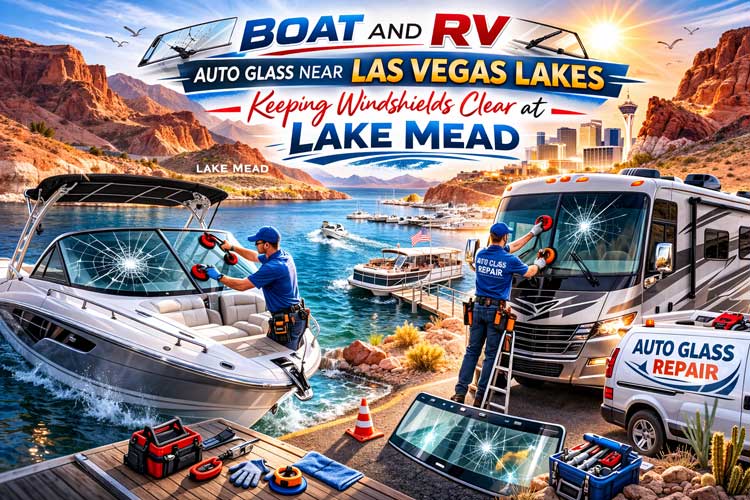
    Boat and RV Auto Glass Near Las Vegas Lakes: Keeping Windshields Clear at Lake Mead. Hooking up the trailer, loading the cooler, and heading out toward Lake Mead is pretty much a perfect day off in Southern Nevada—until you realize your RV windshield is sand‑blasted, your tow vehicle has a spreading crack, or your boat’s windshield is so spotted you’re squinting across the water.

    Boat and RV Auto Glass Near Las Vegas Lakes

    Out by the lake, your glass isn’t just there for looks. It’s there so you can:

    • See changing water conditions and hidden hazards
    • Safely tow your boat or RV on windy desert roads
    • Keep dust, spray, and heat from beating up your crew

    At CA Auto Glass, we’ve been helping locals get road‑ and water‑ready for over 30 years, with 4 locations across Las Vegas and mobile service that reaches the Lake Mead area. We focus on affordable pricing and great quality work, and we truly pride ourselves with excellence on auto glass repairs—including boat and RV auto glass near Las Vegas lakes.

    This guide is all about keeping boat, RV, and tow vehicle windshields clear at Lake Mead so you can spend more time enjoying the water and less time fighting glare, cracks, and leaks.


    Why Lake Mead Is Tough on Boat and RV Glass

    Lake Mead National Recreation Area is huge—roughly 290 square miles of water and more than 900 camping and RV sites across about 15 locations, wrapped in desert terrain and sometimes brutal weather. 

    That’s awesome for adventure… but tough on glass.

    1. Dust, Wind, and Long Desert Drives

    Getting to Lake Mead usually means:

    • Freeway speeds on US‑95, I‑515, or I‑11
    • Crosswinds funneling through canyons
    • Dust and sand blowing across access roads and launch ramps

    The National Weather Service frequently issues wind advisories for the lake, warning about strong gusts and blowing dust that can drop visibility on and off the water. 

    All of that means your:

    • RV windshield takes constant sandblasting
    • Tow vehicle’s windshield and side glass see more chips
    • Boat windshield gets coated in fine grit every launch and recovery

    2. Changing Water Levels and Shoreline Conditions

    Because of long‑term drought and climate shifts, Lake Mead’s water levels have dropped and shorelines have reshaped, which affects launch ramps, access roads, and how you approach the water. 

    More exposed shoreline often means:

    • Extra dust, gravel, and loose rock near launch areas
    • More debris on roads leading to campgrounds and marinas
    • Greater chance of stray rocks hitting your tow rig or RV glass

    3. Boating Safety Depends on Clear Glass

    Lake Mead is beautiful—but it’s also a place where boating accidents happen. Local safety campaigns point out that the recreation area sees serious incidents almost every year, which is why the National Park Service and Nevada partners push safe boating reminders before each summer season. 

    Good seamanship includes:

    • Checking weather and wind
    • Having the required safety gear
    • Understanding launch ramp and boating regulations 

    …but it also means making sure you can see. A hazy, cracked, or badly scratched boat windshield or RV windshield makes it harder to spot wakes, debris, or other boaters in time.


    Boat Windshields at Lake Mead: Common Problems and Fixes

    Boat glass (or acrylic) is exposed to a cocktail of things it hates: sun, spray, minerals, dust, and being bumped while you load/unload.

    Typical Lake Mead Boat Windshield Issues

    We regularly see:

    • Pitted or “frosted” glass from a mix of mineral spots and sand
    • Cracks around mounting points from constant vibration on desert roads
    • Cloudy acrylic that someone tried to “polish” with a harsh product
    • Stress cracks from people grabbing the frame to climb in and out

    On the water, these turn into:

    • Glare and halos at sunrise/sunset
    • Distorted views of chop, coves, or other boats
    • Wiper chatter or streaks (for cabin boats)

    Basic Care Tips Between Trips

    You can’t avoid all damage, but you can slow it down:

    • Rinse with fresh water after every trip—don’t let lake minerals bake on.
    • Use a marine‑safe glass/acrylic cleaner, not household abrasives.
    • Avoid leaning or sitting on the windshield frame when boarding.
    • On the trailer, use a proper cover—but don’t let it chafe directly on the glass.

    If you’ve noticed cracks spreading, sections separating from the frame, or glass that’s simply too damaged to see through safely, it may be time to talk about repair or replacement options along with your tow rig’s glass.


    RV and Tow Vehicle Windshields: The Other Half of the Lake Mead Story

    For every boat on Lake Mead, there’s a tow vehicle—and often an RV or camper—doing a lot of hard work in the desert.

    Why RV Windshields Take a Beating

    RV windshields are:

    • Huge, upright targets for rocks and grit
    • Exposed to long stretches of sun while parked at campgrounds or RV villages
    • Critical for visibility on steep, windy stretches around the lake

    With more than 900 camping and RV sites in the Lake Mead National Recreation Area, many with desert exposures and direct sun, it’s not surprising that RV owners see more chips and heat‑related cracking than they’re used to. 

    If your RV is part of your Lake Mead setup, it’s worth checking out:

    👉 RV Windshield Replacement – Las Vegas

    That guide goes deeper into the unique challenges of larger RV glass and how we handle them.

    Tow Vehicle Glass: Don’t Ignore the SUV or Truck

    Your truck or SUV is:

    • Towing weight up hot grades
    • Dealing with crosswinds and truck traffic
    • Getting showered with gravel entering/exiting dirt lots

    Before you hook up and head to the water, it’s smart to run through a quick road‑trip glass checklist. For a detailed version, we put together:

    👉 Road‑Trip Ready Auto Glass: Pre‑Travel Windshield Checklist for Las Vegas Drivers


    Pre‑Launch Auto Glass Checklist for Lake Mead Trips

    Use this simple checklist before you roll toward the launch ramp or your favorite cove.

    For Your Tow Vehicle or RV

    • Windshield chips and cracks
      • Anything in the driver’s line of sight or near the edges?
    • Wipers and washer fluid
      • Clear bugs and dust quickly when the sun is low.
    • Interior haze
      • Clean inside glass to reduce glare at night.
    • Mirrors and front side windows
      • Double‑check for cracks or distortion—especially if you rely on them for backing a trailer.

    If you’re debating between repairing a chip or replacing a windshield before a big trip, this guide is a helpful comparison:

    👉 Windshield Repair vs. Replacement: Which Option Saves You More?

    For Your Boat

    • Check the windshield or windscreen for cracks, loose fasteners, or cloudy spots.
    • Make sure any wipers (on cabin boats) actually clear water and aren’t tearing.
    • Look at side panels and walk‑through sections—these get slammed often as people move forward and back.

    If you spot anything that blocks your view or is likely to fail under chop or wake, it’s smarter to address it in town than on the water.


    What to Do if Glass Gets Damaged During a Lake Trip

    Maybe a rock from a gravel road tagged your RV on the way in. Maybe strong winds at the marina tossed something into your boat glass. It happens.

    Here’s how to limit the damage:

    1. For Windshield Chips

    • Avoid blasting cold A/C directly on hot cracked glass.
    • Skip rough unpaved detours when possible.
    • Schedule a repair as soon as you’re back in town—chips are almost always cheaper to fix than full replacements.

    Our overview on safety and long‑term durability is a good read here:

    👉 Safety & Longevity in Las Vegas Auto Glass Replacements

    2. For Shattered Side or Rear Glass

    If a side window or rear glass on your tow vehicle or RV shatters at or near the lake:

    • Carefully clear loose glass where passengers sit (gloves if you have them).
    • Avoid slamming doors—the shock can stress remaining glass.
    • If the damage makes the vehicle unsafe or miserable to drive, consider mobile service once you’re back toward town.

    We explain how our mobile team works with larger vehicles here:

    👉 Mobile Auto Glass for RVs and Campers

    3. For Boat Windshields

    • If the damage is minor and you can still see clearly, slow down and avoid rough water.
    • If visibility is compromised, treat it like a mechanical problem: get off the water safely and consider ending the day early.
    • Take photos of the damage at the marina; they’re useful if insurance gets involved.

    Why Boat and RV Owners Near Lake Mead Choose CA Auto Glass

    If you play at Lake Mead often, you know: glass issues are part of the lifestyle. The key is fixing them correctly and affordably, instead of hoping they’ll “hold until next season.”

    At CA Auto Glass, we bring:

    • Over 30 years in business in Southern Nevada
    • 4 convenient Las Vegas locations plus mobile coverage that reaches the Lake Mead area
    • Affordable pricing that makes it realistic to fix problems before they snowball
    • Great quality work on RV windshields, tow vehicles, and more
    • A team that genuinely prides itself with excellence on auto glass repairs

    We also understand the realities of desert life—heat, wind, dust, long towing miles—and build that into how we install and seal every piece of glass we touch.

    For a bigger‑picture look at how we think about keeping your glass safe and durable, you can also read:

    👉 Off‑Road Auto Glass Protection for Las Vegas Drivers

    A lot of those same principles apply when you’re bouncing between campgrounds, launch ramps, and desert backroads around Lake Mead.


    Ready to Get Your Boat or RV Auto Glass Lake‑Ready?

    If you’re planning weekends at Lake Mead, Lake Mohave, or any of the Las Vegas‑area lakes and you’ve noticed:

    • Chips or cracks in your RV or tow vehicle windshield
    • Noisy, drafty, or loose side windows
    • Damaged or cloudy boat windshields

    …this is the perfect time to handle it before your next launch.

    You can:

    At CA Auto Glass, we’ll help keep your boat and RV auto glass near Las Vegas lakes clear, safe, and ready—so when you point your rig toward Lake Mead, the only thing you’re worrying about is where to drop anchor.

  • EV Auto Glass in the Las Vegas Heat

    EV Auto Glass in the Las Vegas Heat

    EV Auto Glass in the Las Vegas Heat: What Tesla and Electric Vehicle Owners Need to Know. If you drive a Tesla, Rivian, Hyundai IONIQ, Ford Lightning, or any other EV around Las Vegas, you’ve probably already noticed two things:

    1. The glass area is huge (massive windshields, big side windows, panoramic roofs), and
    2. The desert heat doesn’t play around.

    That combination means EV auto glass in Las Vegas isn’t just “regular glass with a chip.” It’s a critical part of your car’s safety systems, energy efficiency, comfort, and even your driving range.

    EV Auto Glass in the Las Vegas Heat

    At CA Auto Glass, we’ve been working on auto glass in Southern Nevada for over 30 years, with 4 locations in Las Vegas and full mobile service across the valley. We’re committed to affordable pricing and great quality work, and we truly pride ourselves with excellence on auto glass repairs—including the specialized glass on Teslas and other electric vehicles.

    This guide breaks down what EV owners in the Las Vegas heat really need to know about their auto glass, from heat and range to ADAS cameras and calibration.


    Why EV Auto Glass Is Different from “Regular” Glass

    EVs didn’t just swap the engine for a battery. The glass is different too, and it’s designed to work with the rest of the electric platform.

    Larger Glass, Panoramic Roofs, and Laminated Panels

    Many EVs use:

    • Huge, steeply raked windshields
    • Panoramic roofs that may be laminated like windshields instead of simple tempered glass 
    • Large side and rear windows to improve visibility and aerodynamics

    Modern laminated glass is built from two sheets of glass with a plastic interlayer, often engineered to block UV and infrared (IR) heat while still meeting safety and impact requirements. 

    That’s important for EVs, because controlling cabin temperature directly affects how hard the A/C has to work—and therefore your range.

    Solar‑Control and Acoustic Glass for Comfort 

    and

     Range

    EV glass is increasingly designed to help:

    • Keep the cabin cooler
    • Cut wind and traffic noise (especially noticeable in quiet EV cabins)
    • Reduce the A/C load, which can help preserve battery range

    Solar‑control interlayers in laminated glass can significantly reduce IR and UV energy entering the vehicle, keeping interiors cooler and allowing the A/C to run less. Tests on EVs with advanced solar‑control films have shown up to 20% reduction in air‑conditioning energy use, which directly supports longer electric driving range. 

    On top of that, acoustic interlayers are used to dampen vibrations and make cabins quieter—especially in EVs, where you don’t have engine noise to mask road and wind sounds. 

    Cameras, Sensors, and ADAS Behind the Glass

    Most EVs come loaded with Advanced Driver Assistance Systems (ADAS):

    • Autopilot / lane‑keeping
    • Adaptive cruise control
    • Collision avoidance and emergency braking

    Many of these systems rely on cameras mounted behind the windshield or integrated around the roof and pillars. Tesla, for example, documents that if a camera or windshield is replaced, the cameras must be re‑calibrated so the system can accurately “see” lane lines and surroundings again. 

    That means EV windshield replacement isn’t just “glass out, glass in.” The optical quality, thickness, and correct mounting all matter for safety features to work properly.


    What the Las Vegas Heat Does to EV Auto Glass

    Las Vegas is famous (or infamous) for triple‑digit summers. The National Weather Service notes that the area sees abundant sunshine and hot summer temperatures that regularly reach into the triple digits, with nights that can stay warm as well. 

    For your EV’s glass, that has a few big impacts.

    1. Thermal Stress on Big Glass Panels

    Large EV windshields and panoramic roofs expand and contract with temperature. When:

    • Glass bakes in direct sun
    • One side is cooled quickly by max A/C
    • A passing storm douses hot glass with cooler rain

    …you’re putting that glass and its edges under repeated thermal stress. Minor chips in the glass or small flaws at the edges are much more likely to grow into cracks under these conditions.

    2. Faster Aging of Seals and Adhesives

    Heat and UV attack:

    • Urethane adhesives that hold windshields and roof glass in place
    • Rubber seals around doors, quarter windows, and hatch glass

    U.S. safety standards like FMVSS 205 (glazing materials) and FMVSS 212 (windshield retention) are meant to ensure that glass and mountings maintain visibility and help keep occupants inside during crashes. 

    But in real‑world Las Vegas conditions, those materials are aging under more stress than the average climate, which is why proper installation and high‑quality adhesives matter even more on EVs.

    3. Heat, A/C Load, and EV Range

    In an EV, every watt going to the air‑conditioning is a watt not going to propulsion. That’s why EV glass manufacturers put so much effort into solar‑control glazing—to reduce the energy used for cooling. 

    If your EV ends up with replacement glass that doesn’t match the original solar and acoustic properties, you could notice:

    • A hotter cabin
    • More noise, especially at highway speeds
    • Slightly worse range on the hottest days

    That’s why EV owners in Las Vegas benefit from a shop that understands what kind of glass was originally installed—and how to match it correctly.


    Common EV Auto Glass Issues We See in the Las Vegas Area

    Here’s what tends to bring Tesla and EV owners to CA Auto Glass around the valley:

    1. Rock Chips and Spreading Cracks

    Big, steep windshields are rock magnets. In Las Vegas traffic, chips can quickly become cracks thanks to:

    • High freeway speeds
    • Intense sun on already‑stressed glass
    • Temperature swings between parked and driving

    The sooner you address a chip, the better your odds of avoiding a full replacement. For a general breakdown of repair vs replacement decisions, this guide is handy:

    👉 Windshield Repair vs. Replacement: Which Option Saves You More?

    2. Panoramic Roof Concerns

    Owners sometimes report:

    • Creaking or popping sounds from roof glass as the body flexes and temps change
    • Visible edge chips or scratches near roof glass
    • Worries about cracks after extreme heat waves

    Many EV roofs are laminated glass that’s part of the structural and comfort system, not just a “window in the roof,” so proper inspection and replacement matters.

    3. ADAS Warnings After Glass Work

    If a previous glass job wasn’t done correctly—or calibration steps were skipped—owners may see:

    • Persistent ADAS warnings or errors
    • Lane‑keeping or traffic‑aware cruise acting strangely
    • Messages about cameras needing calibration

    Our separate article

    👉 ADAS Windshield Calibration in Las Vegas

    dives into why calibration matters so much after windshield replacement on modern vehicles, EVs included.


    EV Windshield Repair vs Replacement: What’s Different?

    The basic rules of glass damage still apply to EVs:

    • Small, clean chips away from the edges and sensors may be repairable
    • Long cracks, edge damage, or damage in the camera’s field of view usually mean replacement is the safer choice

    What’s different for EVs is what’s riding on the glass:

    • ADAS cameras and sensors
    • Acoustic and solar‑control layers
    • Larger bonded areas that help with structure

    When we look at an EV windshield at CA Auto Glass, we’re not just asking “Can we fill this chip?” We’re also asking:

    • Will this repair meet safety and clarity requirements under FMVSS 205
    • Will it preserve the optical quality needed for cameras and sensors?
    • Is the damage near a critical ADAS zone, where even a good repair might still distort the image?

    If replacement is the better call, we’ll explain why and walk you through the cost and options clearly.


    ADAS and Camera Calibration After EV Glass Replacement

    For Teslas and other EVs, calibration isn’t optional—it’s part of doing the job right.

    Tesla’s own documentation notes that if a camera or the windshield is replaced, you must clear and recalibrate cameras through the vehicle interface, and then let the car complete calibration as you drive under the right conditions. 

    Depending on the model and situation, proper service can involve:

    • Static calibration with targets in a controlled space
    • Dynamic calibration (driving on well‑marked roads)
    • Verifying that warning messages are cleared and functions behave normally

    At CA Auto Glass, we:

    • Use glass that’s compatible with your EV’s camera and sensor layout
    • Follow OEM‑aligned procedures and best practices for ADAS‑equipped vehicles
    • Coordinate calibration needs so you’re not left guessing whether your safety systems still work correctly

    For a deeper look at our philosophy on safe, long‑lasting glass work, you can also check out:

    👉 Safety & Longevity in Las Vegas Auto Glass Replacements


    How CA Auto Glass Handles EV Auto Glass in Las Vegas Heat

    EV owners often assume they have to go straight to the dealer or a specialty shop. In reality, you can get high‑quality EV glass work locally without the dealership price tag.

    Here’s how we approach it at CA Auto Glass:

    1. EV‑Aware Inspection

    We look at:

    • Type of glass (solar‑control, acoustic, laminated vs tempered)
    • Location and field of view of cameras and sensors
    • Any signs of seal failure, edge damage, or prior poor installation

    2. Matching the Right Glass

    We aim to match, as closely as possible:

    • Solar and acoustic properties of the original glass
    • Tint bands and shading
    • Sensor and camera window areas

    That reduces the chance of increased cabin heat, extra noise, or ADAS trouble after replacement.

    3. Heat‑Smart Installation

    In Las Vegas, the way you store and install materials matters. We:

    • Use professional‑grade adhesives designed to meet windshield mounting standards such as FMVSS 212 
    • Avoid setting glass on surfaces that are excessively super‑heated when possible
    • Respect safe cure times based on actual temperature and humidity, not just a generic chart

    4. Clear, Affordable Pricing

    We know EV glass can be expensive. Our goal is to keep pricing as affordable as possible without cutting corners on safety or quality. If there’s a safe repair option instead of replacement, we’ll tell you.

    5. In‑Shop and Mobile Options

    Many EV jobs are best in‑shop, especially when:

    • ADAS calibration or specialized equipment is needed
    • Panoramic roofs or complex glazing are involved

    But for chips and simpler issues, our mobile service is a huge help if you’re trying to balance work, family, and life:

    👉 Mobile Auto Glass Repair – CA Auto Glass


    Practical Care Tips for EV Auto Glass in the Desert

    A few habits can help your Tesla or other EV’s glass last longer in Las Vegas:

    • Use shade when you can – Garages, carports, and covered parking reduce glass and interior temps.
    • Run a sunshade – Especially on those big EV windshields.
    • Vent first, then blast A/C – Let hot air escape briefly before cranking max A/C on super‑hot glass.
    • Clean cameras and glass regularly – Use proper glass cleaner and a soft cloth; avoid wax or sealant where cameras “look” through the glass.
    • Fix chips early – It’s almost always cheaper to repair a chip than replace an EV windshield after it cracks.

    If you’re planning a summer road trip in your EV, pair these tips with our checklist:

    👉 Road‑Trip Ready Auto Glass: Pre‑Travel Windshield Checklist for Las Vegas Drivers


    Ready to Get Your EV Auto Glass Checked in Las Vegas?

    If your Tesla or other EV has:

    • A growing crack in the windshield
    • Chips near the camera area
    • Strange noises or leaks around panoramic roof glass
    • ADAS warnings after previous glass work

    …it’s a good time to have it looked at before another Las Vegas heat wave makes things worse.

    You can:

    At CA Auto Glass, we bring over 30 years of experience, affordable pricing, and great quality work to every job—and we truly pride ourselves with excellence on auto glass repairs, whether your vehicle burns gas or runs on electrons.

  • Henderson Family Auto Glass Guide

    Henderson Family Auto Glass Guide

    Henderson Family Auto Glass Guide: Protecting Minivan and SUV Windows All Year Long. If you’re shuttling kids between school, practice, Costco, and weekend trips around Henderson, your minivan or SUV isn’t just transportation — it’s the family HQ on wheels. And all that glass around your crew? It’s doing a lot more than keeping the dust out.

    Henderson Family Auto Glass Guide

    At CA Auto Glass, we’ve been helping families across Las Vegas and Henderson for over 30 years, with 4 locations in Las Vegas and full mobile service. We’re known for affordable pricing and great quality work, and we genuinely pride ourselves with excellence on auto glass repairs — especially on the minivans and SUVs that haul the whole family.

    This Henderson Family Auto Glass Guide: Protecting Minivan and SUV Windows All Year Long will walk you through:

    • Why family vehicles need extra glass care
    • How Henderson’s weather affects your windows
    • Kid‑focused safety tips for power windows and sliding doors
    • A simple year‑round checklist just for minivans and SUVs
    • When to call in the pros at CA Auto Glass

    Why Minivan and SUV Windows Need Extra Attention

    Family vehicles live a harder life than most commuter sedans:

    • More passengers
    • More doors and sliding doors
    • More third‑row windows and hatch glass
    • More time spent in drop‑off lanes, parking lots, and sports fields

    Bigger Glass, Bigger Targets

    Minivans and SUVs have larger side and rear windows than most cars — great for visibility, but it also means:

    • More glass area facing parking lot hazards
    • Bigger panes that flex more with temperature changes
    • More exposed edges around sliding doors and rear hatches

    Federal safety rules like FMVSS 226 even treat many side windows in vans and SUVs as part of “ejection mitigation” systems, helping keep passengers from being thrown out during rollovers. That’s a fancy way of saying: those side windows are part of the safety net for the people in rows 2 and 3.

    More Kids, More Power Windows

    Family vehicles usually come with:

    • Multiple power window switches within kid‑arm reach
    • Rear vent windows or quarter glass near third‑row seats
    • Child locks and window lockout buttons that don’t always get used

    Safety organizations like NHTSA and Kids and Car Safety have spent years warning that power windows can seriously injure children if they close on fingers, hands, or even necks — power windows can exert 30–80 pounds of force.

    That’s why keeping those windows working smoothly and safely matters just as much as fixing chips and cracks.


    Henderson Weather vs. Family Auto Glass

    Henderson’s climate is basically “Las Vegas, but with a bit more neighborhood and a lot of sun.”

    According to long‑term climate data, the Las Vegas valley sees abundant sunshine and hot summer temperatures that reach into the triple digits, with winter nights that can dip into the 20s. Summer weather data for Henderson shows average summer highs in the upper 90s to near 100°F, with peak daily average highs around 106°F in mid‑July.

    For your minivan or SUV windows, that means:

    • Summer: Intense heat and UV beating on large glass panels
    • Monsoon season: Sudden storms, wind, and flying debris
    • Winter nights: Cold snaps that stress glass and seals

    Let’s break that down by season.

    Summer: Heat, UV, and Long Drives

    Family life in Henderson in summer =:

    • Hot school pickups
    • Road trips to California, Utah, or Arizona
    • Long park days with the van baking in a lot

    That heat:

    • Makes small chips and cracks more likely to spread
    • Dries and shrinks weatherstripping around sliding doors and rear glass
    • Ages power window motors, plastic clips, and regulators faster

    If you’re planning a longer drive, this is a great companion read:

    👉 Road‑Trip Ready Auto Glass: Pre‑Travel Windshield Checklist for Las Vegas Drivers

    Monsoon Storms & Windy Days

    Henderson gets its share of:

    • Dust storms
    • Gusty afternoons
    • Sudden heavy downpours in monsoon season

    Your family vehicle’s windows and seals are dealing with:

    • Dust and grit grinding into window tracks and seals
    • Water testing every weak point around rear hatches and sliding doors
    • Stray branches or debris slapping side glass

    Our guide

    👉 Preparing Your Vehicle’s Glass for Las Vegas Rainy Days

    dives deeper into how storms find the weak spots in your glass and seals.

    Chilly Winter Mornings

    No, Henderson isn’t Minnesota — but winter nights can still drop into the low 30s around the valley, and the coldest nights for Las Vegas can fall into the 20s.

    Those chilly mornings encourage:

    • Heavy defroster use on front and rear glass
    • Window scraping in higher or outlying neighborhoods
    • Driving with interior warm and exterior glass still cold

    Rapid temperature changes (cold glass + hot defrost or cabin heat) can stress existing chips and cracks, especially on large minivan and SUV windshields and back glass.


    Kid‑Focused Safety: Power Windows & Sliding Doors

    If you have kids in car seats or boosters, your family auto glass guide has to cover one big topic: power window safety.

    Power Windows and Children

    NHTSA and safety groups have documented hundreds of injuries each year from power windows, many involving children. Kids may:

    • Lean on switches
    • Stick hands or heads out the window
    • Close windows on their own fingers during play

    NHTSA’s child safety advice includes: teaching kids not to play with window switches, making sure hands and heads are clear before closing windows, properly restraining children so they can’t easily reach switches, and never leaving kids alone in a vehicle.

    Family‑Window Safety Checklist

    For your minivan or SUV, especially in Henderson, build these into your habits:

    • Use the rear window lockout when kids are in the back seats
    • Teach kids that windows are not toys
    • Show older kids how to safely close windows (looking and listening first)
    • Check that your power windows aren’t binding, grinding, or stuttering — all signs they might fail at the worst time

    If a window is slow, crooked, or dropping into the door, it’s time for power window repair before it strands you at school pickup. Our dedicated page

    👉 Power Window Repair – Las Vegas

    explains how we handle regulators, motors, and switches across family vehicles.


    Henderson Family Auto Glass: Year‑Round Minivan & SUV Checklist

    Here’s a simple, family‑friendly checklist to keep your minivan and SUV windows in good shape all year.

    Every Month

    • Walk around the vehicle with the kids – Make it a family “inspection game”
    • ✅ Check for new chips or cracks on all windows, not just the windshield
    • ✅ Run every power window up and down at least once
    • ✅ Make sure rear hatch glass and third‑row windows are sealing properly

    If you want a more general schedule, this post is a great add‑on:

    👉 How Often Should You Check Your Car Windows and Windshield Seals?

    At the Start of Each Season

    Spring (sports & school events):

    • Inspect side windows and mirrors for parking lot dings
    • Clean off winter residue with proper glass cleaner and microfiber
    • Double‑check rear hatch glass — kids’ gear and strollers are rough on seals

    Summer (peak heat):

    • Fix any chips before road trips or long drives
    • Consider using a sunshade and parking in shade when possible
    • Watch for new noises from power windows as heat stresses motors and tracks

    For a bigger picture on how desert climate affects your glass, see:

    👉 Las Vegas Auto Glass: How the Desert Climate Affects Your Car’s Windows

    Monsoon & Fall:

    • After big storms, check for leaks around sliding doors and hatch
    • Make sure rear defroster and wiper (if equipped) still work properly
    • Clean out caked dust from window channels with a soft brush or cloth

    Winter:

    • Go easy on scraping — don’t attack the glass with metal tools
    • Let the defroster warm the glass gradually
    • If a crack is already there, avoid blasting hot air on freezing glass

    Henderson‑Specific Threat: Parking Lots, Schools, and Parks

    Minivans and SUVs spend a lot of time in:

    • School drop‑off and pick‑up lines
    • Busy Henderson shopping centers
    • Parks and sports complex parking lots

    That means more exposures to:

    • Door dings and door‑to‑door glass bumps
    • Runaway shopping carts
    • Stray balls and sports gear
    • Smash‑and‑grab break‑ins when gear is left visible

    Two Henderson‑focused reads that pair really well with this guide:

    They go deeper into exactly how those “boring” parking lot moments end up sending people to us for car window replacement and repair.


    When Your Family Vehicle Really Needs a Pro

    For Henderson families, it’s time to call CA Auto Glass when you notice:

    • A chip or crack in any window that’s growing or near the edge
    • A sliding door window that’s off‑track or leaves a gap
    • Power windows that don’t respond well in heat or make grinding noises
    • Moisture, fogging, or water trails around rear side glass or hatch windows
    • Third‑row kids complaining about cold drafts or hot air around their seats

    Our techs can often catch problems early — before they turn into:

    • Fully shattered side glass
    • Inoperable sliding doors
    • Big leaks that stain headliners or damage interior trim

    And because we offer mobile auto glass repair, we can come to your Henderson driveway, office, or school lot if that’s easier for your schedule:

    👉 Mobile Auto Glass Repair – Las Vegas & Henderson


    How CA Auto Glass Helps Henderson Families

    At CA Auto Glass, we understand what life looks like in a Henderson minivan or SUV — car seats, snack cups, soccer balls, backpacks, and a lot of miles around the valley.

    Here’s what you get when you trust us with your family’s auto glass:

    • Over 30 years in business serving Southern Nevada
    • 4 locations in Las Vegas, with mobile service out to Henderson
    • Affordable pricing and clear, honest quotes
    • Great quality work on windshields, side windows, rear glass, and power windows
    • A team that truly prides itself with excellence on auto glass repairs

    We also think long‑term: our process and materials are chosen to handle Henderson heat, dust, storms, and kid duty, not just look good for a week.

    For a deeper look at how we think about safety and durability in every repair or replacement, check out:

    👉 Safety & Longevity in Las Vegas Auto Glass Replacements


    Ready to Protect Your Minivan or SUV Windows All Year Long?

    If you’re a Henderson family driving a minivan or SUV and you’ve noticed:

    • Chips, cracks, or spreading damage
    • Stubborn or noisy power windows
    • Leaks or drafts near third‑row or hatch windows

    …this is the perfect time to handle it before the next heat wave, storm, or busy school season.

    You can:

    At CA Auto Glass, we’ll help your Henderson family auto glass stay strong, safe, and comfortable — so your minivan or SUV is ready for whatever the year (and your kids) throw at it.

  • Road‑Trip Ready Auto Glass: Pre‑Travel Windshield Checklist for Las Vegas Drivers

    Road‑Trip Ready Auto Glass: Pre‑Travel Windshield Checklist for Las Vegas Drivers

    Road‑Trip Ready Auto Glass: Pre‑Travel Windshield Checklist for Las Vegas Drivers. Few things feel better than rolling out of Las Vegas before sunrise, coffee in the cup holder, headed for the coast, the Grand Canyon, or Zion. But if your windshield or auto glass isn’t road‑trip ready, that dream drive can turn stressful fast.

    At CA Auto Glass, we’ve been helping locals get road‑trip ready for over 30 years, with 4 locations across Las Vegas, mobile service, affordable pricing, and great quality work backed by a team that truly prides itself on excellence in auto glass repairs

    Road‑Trip Ready Auto Glass

    This guide is your “Road‑Trip Ready Auto Glass: Pre‑Travel Windshield Checklist for Las Vegas Drivers” — simple, practical steps you can take before you hit I‑15, US‑95, or the 215 so your glass is as ready as your playlist.


    Why Your Windshield Matters More on a Road Trip

    Around town, a little haze or a tiny chip is annoying. On a long drive, it can turn into a real safety issue:

    • Higher speeds = harder impacts. A rock that hits at 75 mph between Vegas and Barstow hits much harder than in city traffic. Road debris is one of the leading causes of windshield chips and cracks. 
    • Las Vegas sun + desert highways = eye strain. A dirty or pitted windshield amplifies glare and makes it harder to see through oncoming headlights at night.
    • The windshield is a safety part, not just “glass.” NHTSA considers windshield glazing part of a vehicle’s overall safety design — it helps support the roof and keeps airbags working correctly in many vehicles. 

    Going on a trip is the perfect excuse to give your auto glass some attention it usually doesn’t get.


    Road‑Trip Ready Auto Glass: Pre‑Travel Windshield Checklist

    Print this out, screenshot it, or just walk through it the week before you leave.

    1. Do a Slow, Honest Windshield Inspection

    Pick a time when the sun is low (morning or late afternoon), park where light hits the glass at an angle, and look for:

    • Chips or “stars” — especially near the middle or lower edge
    • Cracks that touch the edge of the glass
    • Lines in your main viewing area that catch your eye while you drive

    Desert heat and sudden temperature swings in Las Vegas can make small chips spread faster, especially once you’re running highway speeds for hours. 

    If you’re not sure whether a chip needs repair or a full replacement, CA Auto Glass breaks that down clearly in Windshield Repair vs. Replacement: Which Option Saves You More?


    2. Fix Chips 

    Before

     They Hit the Freeway

    On a road trip, you’re stacking all the things glass hates:

    • High speeds
    • Long hours in the sun
    • Bumpy stretches of road
    • Rapid A/C cool‑downs

    Auto and safety experts (including AAA) constantly repeat it: repair chips early, before they become full cracks — it’s cheaper and safer. 

    At CA Auto Glass, we’ll always tell you honestly if a quick repair is enough or if a replacement makes more sense for a long trip. Because we stock a huge range of glass and have four Las Vegas locations plus mobile service, we can usually squeeze in pre‑trip repairs without blowing up your schedule. 

    If you like the idea of quick checkups that save you from expensive surprises, you’ll probably also like Why Regular Auto Glass Inspections Save You Money in the Long Run.


    3. Deep‑Clean the Glass Inside and Out

    You don’t realize how dirty your windshield is… until you’re driving into a low sun for three hours.

    Before you leave:

    • Clean the outside with proper glass cleaner and a soft towel (no abrasive pads).
    • Clean the inside to remove film from off‑gassing plastics and smokers’ haze if you’ve got it.
    • Pay special attention to the wiper sweep area and the driver’s eye level — that’s where streaks and fine scratches show up the most.

    Good visibility is one of the simplest ways to reduce risk. European safety experts like DEKRA emphasize that poor glass care and worn wipers are a real hazard because they increase glare and reduce clarity, especially at night. 

    If you’re curious how Vegas heat and dust affect your glass over time, take a look at Las Vegas Auto Glass: How the Desert Climate Affects Your Car’s Windows.


    4. Check Your Wipers and Washer Fluid Like a Pro

    Long drives mean bugs, dust, sudden rain, and truck spray. Streaky wipers on a bug‑splattered windshield at 75 mph is not the vibe.

    Before a road trip:

    • Inspect the wiper blades – Look for cracks, missing pieces, or blades that don’t sit flat.
    • Test them on a wet windshield – If they skip, chatter, or leave lines, replace them.
    • Top off washer fluid – Use real washer fluid, not plain water, so it can cut bug residue and road film.

    AAA and other safety organizations recommend replacing wipers at least once or twice a year, or any time they start streaking or chattering. 


    5. Don’t Forget Side Windows, Mirrors, and Rear Glass

    “Road‑trip ready auto glass” doesn’t stop at the windshield:

    • Side windows – Check for chips near the edges and make sure they roll up and down smoothly.
    • Mirrors – Look for cracks, loose housings, and yellowing or “wavy” reflections.
    • Rear glass – Make sure the defroster works and there are no long cracks or shattered corners.

    On long drives, you rely heavily on mirrors and rear glass when changing lanes around RVs and semis. Any distortion or damage that messes with depth perception is worth fixing before you go.

    If it’s been a while since you looked at the rest of your glass, How Often Should You Check Your Car Windows and Windshield Seals? is a nice, simple refresher.


    6. Check for ADAS Cameras and Sensors in the Glass

    If your car has:

    • Lane‑keeping assist
    • Automatic emergency braking
    • Adaptive cruise control
    • Traffic sign recognition

    …there’s a good chance a camera or sensor is mounted behind the windshield. If that glass has been replaced recently or has a serious crack, it’s worth asking if you need calibration before a long trip.

    NHTSA and IIHS research shows that properly functioning driver‑assistance systems can significantly reduce certain types of crashes — but only if the sensors “see” the road correctly. 

    CA Auto Glass covers this in detail in ADAS Windshield Calibration in Las Vegas and can handle calibration in‑house when needed, so your tech isn’t guessing at lane lines all the way to California.


    7. Inspect Seals and Trim for Wind Noise and Leaks

    A road trip is the worst time to discover:

    • A whistling windshield at highway speeds
    • A rear window that leaks when you hit rain
    • Loose trim that flaps in strong crosswinds

    Before you go, check:

    • Rubber seals around the windshield and windows for cracks or gaps
    • Any spots where you’ve noticed wind noise in the past
    • Damp headliners, carpets, or musty smells after washes or storms

    Dry, cracked seals are common in the Vegas desert climate and can be a weak point when you run into rain, dust storms, or big temperature swings on a long drive. 


    8. Pack a Simple “Glass Emergency Kit”

    You don’t need to go overboard — just toss a few helpful things in the trunk or door pocket:

    • A microfiber towel for quick cleanup
    • Small bottle of ammonia‑free glass cleaner
    • A roll of painter’s tape and a folded clear plastic sheet (for temporary covering if a side window breaks)
    • A printed or saved contact for your insurance and CA Auto Glass in case you need follow‑up repair when you’re back in Las Vegas

    If a rock hits your windshield on the way out of town or on the way home, What to Do If a Rock Hits Your Windshield on a Las Vegas Freeway is a great step‑by‑step guide for staying calm and avoiding making the damage worse.


    9. Plan for Desert Weather: Dust, Wind, and Sudden Storms

    Road trips from Las Vegas often mean crossing wide‑open desert — which can bring:

    • Dust storms that cut visibility to almost zero
    • Sudden monsoon‑style downpours in summer
    • Strong crosswinds that blow sand and small debris across the road

    The National Weather Service and safety organizations advise that if you’re caught in a dust storm and visibility drops too low, you should pull completely off the road, turn off your lights, set the parking brake, and keep your foot off the brake pedal until it passes. 

    The Nevada Department of Transportation also recommends slowing down, allowing extra space, and being prepared for sudden gusts that can push your vehicle or affect visibility. 

    Your job:

    • Make sure the glass is clean so wipers and washer fluid can do their job.
    • Keep a realistic speed when conditions start to change.
    • Know when it’s safer to pull over and wait it out.

    10. Give Yourself Time for Last‑Minute Repairs

    If your inspection turns up damage that makes you nervous, don’t wait until the night before you leave to deal with it.

    At CA Auto Glass, we:

    • Have 4 locations across Las Vegas, so there’s usually a shop close to home or work. 
    • Offer mobile auto glass repairs in Las Vegas, so we can often come to you while you’re packing or working. 
    • Keep affordable pricing front and center, while still using quality glass and adhesives that hold up to desert conditions and long‑distance drives. 

    If your schedule is already tight, Mobile Auto Glass Repairs in Las Vegas explains how we can handle repairs at your home, office, or wherever you’re getting ready to roll.


    What If Your Windshield Gets Damaged Mid‑Trip?

    Stuff happens — especially on long desert stretches behind trucks and RVs. If a rock hits your glass while you’re out on the road:

    1. Stay calm and keep control. Don’t slam the brakes or jerk the wheel.
    2. Check the damage at the next safe stop. Take photos and note where it is on the glass.
    3. Avoid rapid temp swings. Don’t blast cold A/C straight at the glass if you can help it; big temperature changes can make cracks spread.
    4. Decide if it’s trip‑ending or trip‑manageable.
      • Small chip off to the side? You can usually finish your trip and fix it when you’re back.
      • Crack across your main view or reaching the edge? That’s more serious; consider visiting a local shop on the road and then having CA Auto Glass inspect it when you return.

    When you’re back in Vegas, we can inspect the damage, help you navigate insurance if needed, and tell you straight whether repair will work or replacement is the safer play.


    Why Las Vegas Drivers Trust CA Auto Glass Before Hitting the Road

    If you’re getting ready for a big drive — LA, Phoenix, Utah parks, the coast — the last thing you want is to worry about a sketchy windshield.

    With CA Auto Glass, you get:

    • Over 30 years of local experience with Las Vegas heat, dust, and long‑distance driving habits. 
    • 4 locations across Las Vegas, so you’re never far from help before or after your trip. 
    • Affordable pricing that doesn’t sacrifice safety or quality.
    • Great quality work from technicians who handle windshields, side glass, rear glass, and mirrors all day, every day.
    • A crew that truly prides itself on excellence in auto glass repairs — from everyday commuters to RVs and long‑haul road‑trippers. 

    Want to dig deeper into how we think about safety and durability? Check out Safety & Longevity in Las Vegas Auto Glass Replacements.


    If you love lists and want to go full prep mode, these are worth bookmarking:

    • AAA – Road Trip Car Maintenance Checklist – A broader pre‑trip checklist covering fluids, tires, battery, and more (including washer fluid and wipers). 
    • AAA – Windshield Wiper Safety & Maintenance – Why worn blades are dangerous and how often to change them. 
    • National Weather Service – Dust Storm & Haboob Safety – Official guidance on what to do if you hit a dust storm in the Southwest. 
    • Nevada DOT – High Wind Driving Safety Tips – Simple, practical suggestions for driving in strong wind and blowing dust. 

    Ready to Get Your Auto Glass Road‑Trip Ready?

    If your next adventure is already on the calendar, this is the perfect time to make sure your auto glass is as ready as your bags.

    You can:

    Get your road‑trip ready auto glass dialed in now, and you’ll spend your drive focusing on the scenery — not the crack creeping across your windshield. Follow us on Facebook!

  • Parking Lot Auto Glass Damage in Henderson: Protecting Door Glass, Mirrors, and Rear Windows

    Parking Lot Auto Glass Damage in Henderson: Protecting Door Glass, Mirrors, and Rear Windows

    Parking Lot Auto Glass Damage in Henderson: Protecting Door Glass, Mirrors, and Rear Windows. Parking lots in Henderson are supposed to be boring: grab groceries, hit the gym, meet friends at a restaurant, head home.

    But for a lot of drivers, parking lots are exactly where auto glass problems start — a runaway shopping cart, a too‑tight turn, a quick break‑in, or someone backing out just a little too fast. One second everything’s fine; the next second you’re staring at shattered door glass, a broken mirror, or a cracked rear window.

    Parking Lot Auto Glass Damage in Henderson

    At CA Auto Glass, we’ve been helping drivers across Las Vegas and Henderson with auto glass damage for over 30 years, with 4 convenient locations in Las Vegas plus full mobile service. We’ve built our name on affordable pricing, great quality work, and a team that truly prides itself on excellence in auto glass repairs

    This guide is all about parking lot auto glass damage in Henderson — how it happens, how to prevent it, and what to do when door glass, mirrors, or rear windows take a hit.


    Why Parking Lots in Henderson Are So Hard on Your Glass

    On paper, Henderson is pretty calm and family‑friendly. In reality, local crime reports and police blotters keep showing a familiar pattern: vehicle break‑ins and vandalism concentrated in public parking lots, with smashed windows and stolen bags or electronics. 

    Add in everyday low‑speed mishaps — tight spaces at busy shopping centers, crowded school and park lots, people in a hurry — and your glass takes a lot of abuse:

    • Door‑to‑door bumps when someone swings their door wide
    • Shopping carts rolling downhill into your doors or rear hatch
    • Cars backing up blind and clipping mirrors or rear glass
    • Kids’ sports gear or stray balls smacking into side windows

    Most of these happen at walking speed, but that’s all it takes to crack a window, snap a mirror housing, or shatter a rear glass panel.


    The Big Three: Door Glass, Mirrors, and Rear Windows

    1. Door Glass: Your Most Exposed Glass in the Lot

    Side door glass is usually what gets hit first:

    • Side swipes and door slams – Another driver swings their door open into yours, or scrapes past a little too close.
    • Runaway carts – Even a small cart can hit just right and chip or spider a side window.
    • Smash‑and‑grab break‑ins – Thieves like side windows because they’re fast to break and give direct access to bags and electronics on the seats.

    When door glass fails, it usually shatters completely (tempered glass), leaving a mess of cubes inside the door and all over the seats. That’s not just annoying — it leaves your interior exposed to heat, dust, and more theft until it’s fixed.

    If you ever end up with a shattered side window, CA Auto Glass can handle everything from glass replacement to cleaning out glass from the door and tracks. You can read more about that on our Car Window Replacement page.


    2. Mirrors: Small Parts, Big Safety Role

    Parking lots are brutal on side mirrors:

    • Narrow aisles where people brush past
    • Drivers cutting corners tight around concrete pillars
    • Cars backing out without fully checking their surroundings

    From a safety standpoint, mirrors aren’t optional. Studies on rear visibility and lane changes have shown that mirrors and rear view systems are critical for spotting people, cars, and obstacles behind and beside you — especially at low speeds in places like parking lots. 

    When a mirror is cracked, loose, or missing:

    • Your blind spots get bigger.
    • Backing out of a space becomes guesswork.
    • You’re more likely to misjudge distance to carts, poles, or other cars.

    At CA Auto Glass, mirror work isn’t an afterthought. We regularly replace side view mirrors, housings, and glass as part of our Auto Glass Replacement services. 


    3. Rear Windows: The Forgotten Safety Glass

    Rear windows don’t get talked about as much as windshields, but they do a ton of work, especially in parking lots:

    • Letting you see over your shoulder while backing up
    • Working with your mirrors and backup camera to avoid poles, carts, and people
    • Keeping your cargo area secure

    Even at low speeds, a vehicle backing into your parked car can crack or completely shatter the rear glass, especially if your hatch or trunk is already under load from inside.

    Rear visibility is such a big deal that federal safety rules now require backup cameras and specific minimum visibility zones behind newer vehicles. Mirrors, windows, and cameras all work together to give drivers a full picture of what’s behind them. 

    If your rear glass is cracked or shattered, it’s not just about keeping dust out — it’s a core safety issue any time you shift into reverse.


    Common Types of Parking Lot Auto Glass Damage in Henderson

    Let’s break down the damage we see most often from Henderson parking lots.

    1. Cart Impacts and Door Dings

    • Shopping carts rolling across sloped parking lots
    • People flinging doors open in tight spaces
    • Trucks or SUVs with high doors hitting lower sedan glass

    These can chip or crack door glass and sometimes clip mirrors hard enough to break the glass or loosen the housing.

    2. Low‑Speed Bumps While Backing

    Even with cameras, people still:

    • Rely only on the screen and forget to check mirrors
    • Rush through backing without a full scan
    • Cut the wheel too sharply leaving a space

    Many backover crashes and low‑speed collisions happen in driveways and parking lots — exactly where mirrors and rear windows matter most. 

    3. Vandalism and Break‑Ins

    Unfortunately, some Henderson parking lots see periodic vehicle burglaries — especially at night or in less‑visible corners. Crime recaps have noted repeated cases of parked cars with smashed windows and stolen personal items

    Thieves like:

    • Dark, far‑out spaces
    • Cars with bags or boxes left in plain sight
    • Vehicles parked for hours at gyms, trailheads, or event venues

    4. Lot Layout and Environment

    • Tight spaces near concrete pillars
    • Landscaping rocks or low walls along the edges of the lot
    • Trees and light poles where drivers misjudge distance

    While your windshield takes freeway debris, your door glass, mirrors, and rear windows take the hits from everyday parking mistakes.


    Smart Parking Strategies to Protect Your Glass

    You can’t control everything in a parking lot, but you can tilt the odds in your favor.

    1. Choose Spots That Protect Your Sides

    Instead of racing for the closest space to the door, look for spots that:

    • Are away from cart corrals and cart return lanes
    • Give you at least a little room on both sides
    • Don’t put you directly next to large trucks or vans that might swing wide

    Insurance and safety experts point out that parking in visible, well‑lit, populated areas helps reduce both collisions and vandalism. 

    2. Park Under Lights, Not Just Shade

    Shade is great for heat, but light is better for security.

    • At night, choose spaces under or near parking lot lights.
    • Avoid hidden corners behind tall hedges, dumpsters, or blank walls.
    • In large lots, try to park where there’s a steady flow of people coming and going.

    The City of Henderson Police Department even created designated “Internet Sales Exchange Zones” — clearly marked spaces in front of police substations — because visible, monitored spots dramatically reduce risk. 

    3. Don’t Advertise What’s Inside

    Most smash‑and‑grab damage starts because something caught a thief’s eye:

    • Leave bags, backpacks, and boxes out of sight (trunk is better than rear seat).
    • Don’t leave phone mounts, charger cords, or laptops visible.
    • At parks or trails, avoid turning your car into a visible locker.

    Progressive and other insurers consistently list “remove valuables” and “park in well‑lit areas” as top tips for avoiding car vandalism and break‑ins. 


    Habits Inside the Car That Help Your Glass Last Longer

    Little routines add up over months of parking around Henderson:

    • Close doors with the windows up or fully down, not halfway, to reduce strain on the glass and regulators.
    • Don’t slam doors when it’s freezing cold or blazing hot — extreme temps plus slamming can stress the glass and seals.
    • Avoid hanging heavy items from the rearview mirror, which can slowly loosen the mount or mirror housing.
    • Keep the inside of the rear glass clear — cargo stacked high can slam into the window during abrupt stops.

    For more on when side windows are worth repairing vs. replacing, you can dive into Your Car’s Side Windows: Repair or Replace? — it’s a helpful breakdown when you’re staring at a crack and trying to decide what’s next.


    What to Do If Your Door Glass, Mirror, or Rear Window Gets Damaged

    If something happens in a parking lot, here’s a calm game plan.

    1. Make Sure You’re Safe

    • Move the vehicle to a safer, better‑lit area if you can drive it.
    • Watch for glass around the tires before you pull away.
    • If it’s clearly vandalism or a break‑in and the suspect might still be nearby, keep your distance and call police.

    Local and national resources for crime victims recommend documenting the scene and contacting law enforcement before cleaning everything up, especially if you’ll be filing an insurance claim. 

    2. Document the Damage

    • Take clear photos of the broken glass, inside and out.
    • Snap pictures of the parking space, any nearby damage (like cart corrals or poles), and anything that looks relevant.
    • Make a quick list of items that were stolen, if any.

    3. Secure the Car as Best You Can

    • Carefully brush large chunks of glass off seats and floorboards so you don’t get cut.
    • If you need to drive a short distance, you can tape plastic or a temporary covering over the opening — but avoid long drives or freeway speeds like this.

    4. Call an Auto Glass Specialist Quickly

    Driving around Henderson with missing door glass, a hanging mirror, or shattered rear glass is:

    • Uncomfortable (heat, dust, noise)
    • Less safe (reduced visibility and structural strength)
    • A target for a second break‑in

    CA Auto Glass offers both in‑shop and mobile service for this exact scenario. Our technicians can come to your driveway, workplace, or even the same shopping center lot where it happened, depending on the situation. You can see how flexible that is in our article Mobile Auto Glass Service: Why It’s the Best Choice for Busy Henderson Drivers


    How CA Auto Glass Helps Henderson Drivers After Parking Lot Damage

    When your car’s been dinged in a Henderson parking lot, you want two things:

    1. A fair, affordable price
    2. Work that’s done right the first time

    At CA Auto Glass, that’s our everyday standard:

    • 30+ years of experience serving Las Vegas and Henderson drivers
    • 4 locations in Las Vegas plus a fully equipped mobile team for on‑site repairs 
    • A huge inventory of glass, including door windows, rear glass, and side mirrors, so most jobs don’t have long waits 
    • Affordable pricing designed to compete without cutting corners on materials or workmanship
    • Technicians who genuinely take pride in clean, careful installation and repairs

    Whether it’s:

    • A shattered rear window from a low‑speed bump
    • Door glass broken in a smash‑and‑grab
    • A side mirror taken out by a too‑tight turn

    …our team can walk you through repair vs. replacement options, help coordinate with your insurance if needed, and get you safely sealed up again. For a broader look at how we balance cost and quality, check out Safety & Longevity in Las Vegas Auto Glass Replacements

    If you’re already dealing with glass damage and just want it handled, our Auto Glass Replacement and Car Window Replacement pages are a good starting point.


    Quick Checklist for Parking Lot Auto Glass Damage in Henderson

    Before you head out to The District, Costco, the gym, or the ball fields, keep this in the back of your mind:

    • Pick safer spots – Visible, well‑lit, and not right next to cart returns or tight pillars.
    • Hide valuables – Don’t give anyone a reason to smash your door glass.
    • Use your mirrors and rear window – Back out slowly and scan, even with a camera.
    • Treat doors and windows gently – Especially in extreme heat or cold.
    • Fix damage early – Cracks, chips, and loose mirrors rarely stay “small problems” for long.

    Need Help with Parking Lot Auto Glass Damage in Henderson?

    If your door glass, mirrors, or rear window just lost a fight with a cart, another car, or a would‑be thief, you don’t have to deal with it alone.

    We’ll help you recover from parking lot auto glass damage in Henderson with honest, affordable pricing and great‑quality work — so the next time you pull into a spot, you can think about your errands, not your glass.

  • Protecting Your Auto Glass from Smash‑and‑Grab Break‑Ins in Las Vegas

    Protecting Your Auto Glass from Smash‑and‑Grab Break‑Ins in Las Vegas

    Protecting Your Auto Glass from Smash‑and‑Grab Break‑Ins in Las Vegas. Smash‑and‑grab break‑ins are one of those “it’ll never happen to me” problems… right up until you walk back to your car and see shattered glass all over the pavement.

    Here in Las Vegas, vehicle crime is a real concern. Some analyses of FBI data show that Las Vegas has one of the highest motor vehicle theft rates in the country, and thefts from vehicles are a big part of that picture. 

    Protecting Your Auto Glass from Smash‑and‑Grab Break‑Ins in Las Vegas

    At CA Auto Glass, we’ve been helping local drivers recover from broken windows and shattered windshields for over 30 years, with 4 locations across Las Vegas, mobile service, affordable pricing, and great quality work. We genuinely pride ourselves on excellence in auto glass repairs — but we’d still rather help you avoid a break‑in in the first place.

    This guide is all about protecting your auto glass from smash‑and‑grab break‑ins in Las Vegas — what thieves look for, what you can change today, and how CA Auto Glass can help if someone does break your glass.


    1. What Smash‑and‑Grab Break‑Ins Really Look Like in Las Vegas

    Smash‑and‑grab is simple:

    1. Thief spots something they want in your vehicle.
    2. They smash a window.
    3. They grab the item and run — all in just a few seconds.

    It happens:

    • In casino and resort parking garages
    • At gyms and shopping centers
    • In apartment lots and neighborhood streets
    • At trailheads and parks on the edges of the valley

    Local and national safety agencies all point out that thieves prefer easy, fast targets — cars with valuables visible, parked in dark corners, with windows cracked or doors unlocked. 

    Your glass is the barrier they’re attacking, so part of your security plan is literally about how you treat your windows and windshield.


    2. Why Your Auto Glass Is Part of Your Security Plan

    Your glass does more than keep dust and heat out:

    • It hides your belongings (especially with proper tint).
    • It slows thieves down — thicker glass, laminated glass, or security film can turn a quick hit into a noisy, risky mess.
    • It affects whether a thief thinks, “easy win” or “too much hassle.”

    Most smash‑and‑grab thieves aren’t car‑theft experts. They’re looking for unlocked doors or glass that will give way quickly in a quiet corner of a lot. 

    That’s good news for you: small changes in how you park, what you leave visible, and how you maintain your glass can make your vehicle a lot less appealing.


    3. Everyday Habits That Make Your Glass a Bad Target

    You can’t control every thief, but you can control how easy you’re making their job.

    3.1. Don’t “advertise” what’s inside

    If someone can see it, they can steal it.

    • Clear the seats and floorboards. Bags, laptops, boxes, shopping bags, backpacks — anything that looks like it might contain valuables.
    • Use the trunk smartly. If you have to stash something, put it in the trunk before you park, not while you’re getting out.
    • Avoid obvious “hiding spots.” A jacket loosely tossed over a bag is basically a billboard.

    NHTSA and other safety groups consistently stress three basics: lock doors, close windows, and keep valuables out of sight. 

    3.2. Park where people (and cameras) are

    According to Las Vegas Metropolitan Police Department prevention tips, thieves are less likely to hit vehicles in well‑lit, high‑visibility areas

    When you can, choose:

    • Spots near building entrances or main walkways
    • Areas in clear view of security cameras
    • Well‑lit places at gas stations and convenience stores

    Try to avoid:

    • Dark corners and isolated spots
    • Parking next to big vans or box trucks that hide your car from view
    • Long‑term parking with valuables left inside

    3.3. Lock it down every time

    It sounds basic, but you’d be surprised how many break‑ins start with an unlocked door or window cracked “just a little.”

    • Lock all doors, roll up all windows, and double‑check sunroofs.
    • Don’t leave your vehicle running and unattended, even “just for a second.”
    • Take your keys — don’t leave spares in the console or under the car. 

    These habits don’t make you bulletproof, but they shift the odds away from your car and toward easier targets.


    4. Using Glass and Tint to Help Deter Break‑Ins

    You can also make smart choices about the glass itself.

    4.1. Quality tint that hides your interior

    Good window tint can:

    • Make it harder to see into your car from a distance
    • Reduce glare from parking lot lights and the Vegas sun
    • Help hold some glass together if a side window is struck

    If you’re considering tint or upgrading old film, you can learn more about your options on the Auto Glass Tint page at CA Auto Glass. Our team can walk you through legal limits, heat rejection, and privacy options that fit both style and security.

    4.2. Consider laminated side glass or security film

    Many cars only have laminated glass in the windshield and tempered glass in the side windows. Laminated glass is harder to punch through quickly — that’s why thieves usually target side windows, not windshields.

    Some owners choose to:

    • Upgrade certain windows to laminated glass (where available)
    • Add professionally installed security film to key side windows

    This won’t make your car unbreakable, but it can change a 2‑second smash into a noisy struggle — exactly what most thieves don’t want.

    If you’re not sure what kind of glass your vehicle has now, our techs at CA Auto Glass can help you check and talk through realistic options that match your budget.


    5. Where Your Car Is Parked Matters — A Lot

    Your glass is most vulnerable when your car is sitting still. A few Vegas‑specific thoughts:

    • On or near the Strip:
      • Use valet or monitored garages when you can.
      • Don’t leave shopping bags, luggage, or casino chips visible in the car.
    • Apartment complexes & condos:
      • Park closer to your unit or near building entrances, not in the far‑back corners.
      • If your complex has a choice between covered but isolated vs. open and visible, choose visible.
    • Trailheads, parks, and sports fields:
      • These are classic smash‑and‑grab spots — thieves know people will be away from the car for hours.
      • Leave as little as possible in the vehicle and lock items in the trunk before you arrive.

    LVMPD’s crime prevention specialists emphasize that awareness and environment are a huge part of reducing crime — where and how you park is a big deal. 


    6. If Someone 

    Does

     Smash Your Glass: What to Do Next

    Even if you do everything “right,” a determined thief might still hit your car. Here’s a calm, step‑by‑step approach that keeps you safe and helps you get back on the road.

    6.1. Put safety first

    • Don’t confront anyone near your vehicle.
    • If you feel unsafe, move to a secure location and call 911.
    • Watch for broken glass around the tires before you move the car.

    6.2. Document and report

    • Take photos of the damage, inside and out.
    • Make a list of what was taken.
    • File a police report with the appropriate agency (LVMPD, Henderson, North Las Vegas, or local jurisdiction). Their online portals can make this easier for non‑emergency reports. 

    6.3. Clean up carefully

    Broken tempered glass can scatter everywhere:

    • Wear gloves if you’re picking up larger pieces.
    • Use a shop‑vac or careful vacuuming to remove glass from seats and carpets.
    • Don’t drive with unsecured shards flapping in the frame — it’s dangerous for you and other drivers.

    6.4. Call an auto glass specialist quickly

    Driving around with a missing side window or shattered rear glass isn’t just annoying — it’s unsafe and invites more theft.

    This is where CA Auto Glass comes in:

    • We can often provide same‑day or next‑day mobile service to your home, work, or even the parking lot where the break‑in happened.
    • Our techs bring the correct glass, install it properly, and clean up the remaining shards so you’re not finding glass for weeks.

    If you want a sense of how quickly we can respond, take a look at Mobile Glass Replacement Las Vegas and Mobile Auto Glass Service: Why It’s the Best Choice for Busy Henderson Drivers.


    7. Why Las Vegas Drivers Call CA Auto Glass After a Break‑In

    When your car has just been hit, you want two things:

    1. A fair price
    2. Work you can trust

    At CA Auto Glass, we’ve built our reputation in Las Vegas on exactly that:

    • Over 30 years in business, serving drivers all over Clark County
    • 4 convenient Las Vegas locations, plus full mobile service across the valley
    • Affordable pricing that stays competitive without cheap materials or shortcuts
    • Great quality work on windshields, side windows, rear glass, power windows, sunroofs, and more
    • A team that truly prides itself on excellence in auto glass repairs — from everyday drivers to work trucks and fleets

    If you’re comparing repair vs. replacement after a break‑in, you might also find this helpful:

    Both articles walk through how we balance safety, durability, and cost for Las Vegas drivers.


    8. Extra Resources on Preventing Vehicle Break‑Ins (Outbound, Non‑Competitors)

    If you’d like more background from law‑enforcement and safety experts, these neutral resources are worth bookmarking:

    • Las Vegas Metropolitan Police Department – Auto Theft Prevention Tips – Practical local advice on locking up, where to park, and what thieves look for. 
    • LVMPD Crime Prevention Resources – General crime‑prevention materials and contacts for specialists who help neighborhoods and businesses reduce risk. 
    • NHTSA – Vehicle Theft Prevention – National safety recommendations on parking, locking, and securing valuables. 
    • FBI / NICB Theft Prevention Tips – Layered strategies for discouraging theft, from lighting and visibility to alarms and tracking devices. 

    None of these sites are auto‑glass competitors — they’re law‑enforcement, safety, or research organizations focused on keeping drivers safer.


    9. Ready to Protect (or Repair) Your Auto Glass in Las Vegas?

    If you’ve had a smash‑and‑grab break‑in — or you just want to be better prepared — CA Auto Glass is here to help.

    Whether you’re dealing with broken glass right now or just want to stay ahead of the next smash‑and‑grab, we’ll help you protect your vehicle with quality work, fair pricing, and decades of experience in the real‑world conditions of Las Vegas.