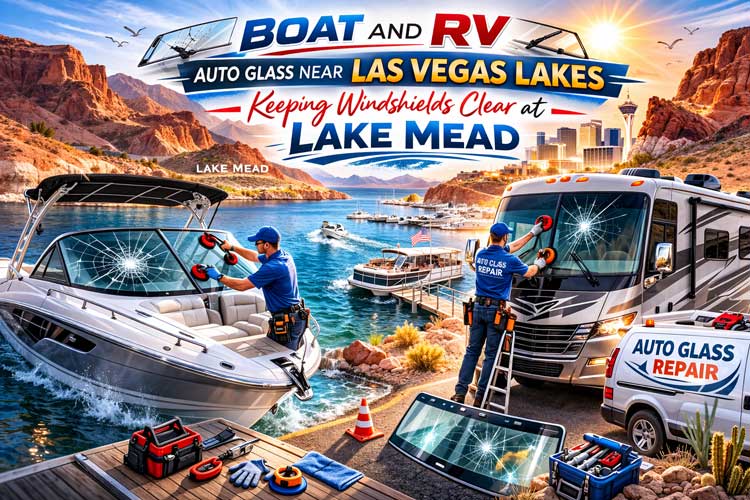
Boat and RV Auto Glass Near Las Vegas Lakes: Keeping Windshields Clear at Lake Mead. Hooking up the trailer, loading the cooler, and heading out toward Lake Mead is pretty much a perfect day off in Southern Nevada—until you realize your RV windshield is sand‑blasted, your tow vehicle has a spreading crack, or your boat’s windshield is so spotted you’re squinting across the water.
Boat and RV Auto Glass Near Las Vegas Lakes
Out by the lake, your glass isn’t just there for looks. It’s there so you can:
- See changing water conditions and hidden hazards
- Safely tow your boat or RV on windy desert roads
- Keep dust, spray, and heat from beating up your crew
At CA Auto Glass, we’ve been helping locals get road‑ and water‑ready for over 30 years, with 4 locations across Las Vegas and mobile service that reaches the Lake Mead area. We focus on affordable pricing and great quality work, and we truly pride ourselves with excellence on auto glass repairs—including boat and RV auto glass near Las Vegas lakes.
This guide is all about keeping boat, RV, and tow vehicle windshields clear at Lake Mead so you can spend more time enjoying the water and less time fighting glare, cracks, and leaks.
Why Lake Mead Is Tough on Boat and RV Glass
Lake Mead National Recreation Area is huge—roughly 290 square miles of water and more than 900 camping and RV sites across about 15 locations, wrapped in desert terrain and sometimes brutal weather.
That’s awesome for adventure… but tough on glass.
1. Dust, Wind, and Long Desert Drives
Getting to Lake Mead usually means:
- Freeway speeds on US‑95, I‑515, or I‑11
- Crosswinds funneling through canyons
- Dust and sand blowing across access roads and launch ramps
The National Weather Service frequently issues wind advisories for the lake, warning about strong gusts and blowing dust that can drop visibility on and off the water.
All of that means your:
- RV windshield takes constant sandblasting
- Tow vehicle’s windshield and side glass see more chips
- Boat windshield gets coated in fine grit every launch and recovery
2. Changing Water Levels and Shoreline Conditions
Because of long‑term drought and climate shifts, Lake Mead’s water levels have dropped and shorelines have reshaped, which affects launch ramps, access roads, and how you approach the water.
More exposed shoreline often means:
- Extra dust, gravel, and loose rock near launch areas
- More debris on roads leading to campgrounds and marinas
- Greater chance of stray rocks hitting your tow rig or RV glass
3. Boating Safety Depends on Clear Glass
Lake Mead is beautiful—but it’s also a place where boating accidents happen. Local safety campaigns point out that the recreation area sees serious incidents almost every year, which is why the National Park Service and Nevada partners push safe boating reminders before each summer season.
Good seamanship includes:
- Checking weather and wind
- Having the required safety gear
- Understanding launch ramp and boating regulations
…but it also means making sure you can see. A hazy, cracked, or badly scratched boat windshield or RV windshield makes it harder to spot wakes, debris, or other boaters in time.
Boat Windshields at Lake Mead: Common Problems and Fixes
Boat glass (or acrylic) is exposed to a cocktail of things it hates: sun, spray, minerals, dust, and being bumped while you load/unload.
Typical Lake Mead Boat Windshield Issues
We regularly see:
- Pitted or “frosted” glass from a mix of mineral spots and sand
- Cracks around mounting points from constant vibration on desert roads
- Cloudy acrylic that someone tried to “polish” with a harsh product
- Stress cracks from people grabbing the frame to climb in and out
On the water, these turn into:
- Glare and halos at sunrise/sunset
- Distorted views of chop, coves, or other boats
- Wiper chatter or streaks (for cabin boats)
Basic Care Tips Between Trips
You can’t avoid all damage, but you can slow it down:
- Rinse with fresh water after every trip—don’t let lake minerals bake on.
- Use a marine‑safe glass/acrylic cleaner, not household abrasives.
- Avoid leaning or sitting on the windshield frame when boarding.
- On the trailer, use a proper cover—but don’t let it chafe directly on the glass.
If you’ve noticed cracks spreading, sections separating from the frame, or glass that’s simply too damaged to see through safely, it may be time to talk about repair or replacement options along with your tow rig’s glass.
RV and Tow Vehicle Windshields: The Other Half of the Lake Mead Story
For every boat on Lake Mead, there’s a tow vehicle—and often an RV or camper—doing a lot of hard work in the desert.
Why RV Windshields Take a Beating
RV windshields are:
- Huge, upright targets for rocks and grit
- Exposed to long stretches of sun while parked at campgrounds or RV villages
- Critical for visibility on steep, windy stretches around the lake
With more than 900 camping and RV sites in the Lake Mead National Recreation Area, many with desert exposures and direct sun, it’s not surprising that RV owners see more chips and heat‑related cracking than they’re used to.
If your RV is part of your Lake Mead setup, it’s worth checking out:
👉 RV Windshield Replacement – Las Vegas
That guide goes deeper into the unique challenges of larger RV glass and how we handle them.
Tow Vehicle Glass: Don’t Ignore the SUV or Truck
Your truck or SUV is:
- Towing weight up hot grades
- Dealing with crosswinds and truck traffic
- Getting showered with gravel entering/exiting dirt lots
Before you hook up and head to the water, it’s smart to run through a quick road‑trip glass checklist. For a detailed version, we put together:
👉 Road‑Trip Ready Auto Glass: Pre‑Travel Windshield Checklist for Las Vegas Drivers
Pre‑Launch Auto Glass Checklist for Lake Mead Trips
Use this simple checklist before you roll toward the launch ramp or your favorite cove.
For Your Tow Vehicle or RV
- Windshield chips and cracks
- Anything in the driver’s line of sight or near the edges?
- Wipers and washer fluid
- Clear bugs and dust quickly when the sun is low.
- Interior haze
- Clean inside glass to reduce glare at night.
- Mirrors and front side windows
- Double‑check for cracks or distortion—especially if you rely on them for backing a trailer.
If you’re debating between repairing a chip or replacing a windshield before a big trip, this guide is a helpful comparison:
👉 Windshield Repair vs. Replacement: Which Option Saves You More?
For Your Boat
- Check the windshield or windscreen for cracks, loose fasteners, or cloudy spots.
- Make sure any wipers (on cabin boats) actually clear water and aren’t tearing.
- Look at side panels and walk‑through sections—these get slammed often as people move forward and back.
If you spot anything that blocks your view or is likely to fail under chop or wake, it’s smarter to address it in town than on the water.
What to Do if Glass Gets Damaged During a Lake Trip
Maybe a rock from a gravel road tagged your RV on the way in. Maybe strong winds at the marina tossed something into your boat glass. It happens.
Here’s how to limit the damage:
1. For Windshield Chips
- Avoid blasting cold A/C directly on hot cracked glass.
- Skip rough unpaved detours when possible.
- Schedule a repair as soon as you’re back in town—chips are almost always cheaper to fix than full replacements.
Our overview on safety and long‑term durability is a good read here:
👉 Safety & Longevity in Las Vegas Auto Glass Replacements
2. For Shattered Side or Rear Glass
If a side window or rear glass on your tow vehicle or RV shatters at or near the lake:
- Carefully clear loose glass where passengers sit (gloves if you have them).
- Avoid slamming doors—the shock can stress remaining glass.
- If the damage makes the vehicle unsafe or miserable to drive, consider mobile service once you’re back toward town.
We explain how our mobile team works with larger vehicles here:
👉 Mobile Auto Glass for RVs and Campers
3. For Boat Windshields
- If the damage is minor and you can still see clearly, slow down and avoid rough water.
- If visibility is compromised, treat it like a mechanical problem: get off the water safely and consider ending the day early.
- Take photos of the damage at the marina; they’re useful if insurance gets involved.
Why Boat and RV Owners Near Lake Mead Choose CA Auto Glass
If you play at Lake Mead often, you know: glass issues are part of the lifestyle. The key is fixing them correctly and affordably, instead of hoping they’ll “hold until next season.”
At CA Auto Glass, we bring:
- Over 30 years in business in Southern Nevada
- 4 convenient Las Vegas locations plus mobile coverage that reaches the Lake Mead area
- Affordable pricing that makes it realistic to fix problems before they snowball
- Great quality work on RV windshields, tow vehicles, and more
- A team that genuinely prides itself with excellence on auto glass repairs
We also understand the realities of desert life—heat, wind, dust, long towing miles—and build that into how we install and seal every piece of glass we touch.
For a bigger‑picture look at how we think about keeping your glass safe and durable, you can also read:
👉 Off‑Road Auto Glass Protection for Las Vegas Drivers
A lot of those same principles apply when you’re bouncing between campgrounds, launch ramps, and desert backroads around Lake Mead.
Ready to Get Your Boat or RV Auto Glass Lake‑Ready?
If you’re planning weekends at Lake Mead, Lake Mohave, or any of the Las Vegas‑area lakes and you’ve noticed:
- Chips or cracks in your RV or tow vehicle windshield
- Noisy, drafty, or loose side windows
- Damaged or cloudy boat windshields
…this is the perfect time to handle it before your next launch.
You can:
- Schedule in‑shop or mobile service through CA Auto Glass – Las Vegas
- Learn more about RV‑specific work here: RV Windshield Replacement – Las Vegas
- Or plan ahead with our Road‑Trip Ready Auto Glass Checklist
At CA Auto Glass, we’ll help keep your boat and RV auto glass near Las Vegas lakes clear, safe, and ready—so when you point your rig toward Lake Mead, the only thing you’re worrying about is where to drop anchor.