EV Auto Glass in the Las Vegas Heat: What Tesla and Electric Vehicle Owners Need to Know. If you drive a Tesla, Rivian, Hyundai IONIQ, Ford Lightning, or any other EV around Las Vegas, you’ve probably already noticed two things:
- The glass area is huge (massive windshields, big side windows, panoramic roofs), and
- The desert heat doesn’t play around.
That combination means EV auto glass in Las Vegas isn’t just “regular glass with a chip.” It’s a critical part of your car’s safety systems, energy efficiency, comfort, and even your driving range.
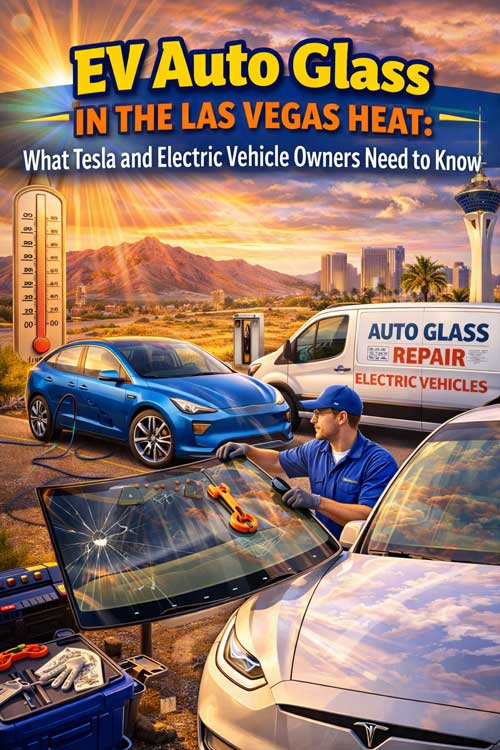
EV Auto Glass in the Las Vegas Heat
At CA Auto Glass, we’ve been working on auto glass in Southern Nevada for over 30 years, with 4 locations in Las Vegas and full mobile service across the valley. We’re committed to affordable pricing and great quality work, and we truly pride ourselves with excellence on auto glass repairs—including the specialized glass on Teslas and other electric vehicles.
This guide breaks down what EV owners in the Las Vegas heat really need to know about their auto glass, from heat and range to ADAS cameras and calibration.
Why EV Auto Glass Is Different from “Regular” Glass
EVs didn’t just swap the engine for a battery. The glass is different too, and it’s designed to work with the rest of the electric platform.
Larger Glass, Panoramic Roofs, and Laminated Panels
Many EVs use:
- Huge, steeply raked windshields
- Panoramic roofs that may be laminated like windshields instead of simple tempered glass
- Large side and rear windows to improve visibility and aerodynamics
Modern laminated glass is built from two sheets of glass with a plastic interlayer, often engineered to block UV and infrared (IR) heat while still meeting safety and impact requirements.
That’s important for EVs, because controlling cabin temperature directly affects how hard the A/C has to work—and therefore your range.
Solar‑Control and Acoustic Glass for Comfort
and
Range
EV glass is increasingly designed to help:
- Keep the cabin cooler
- Cut wind and traffic noise (especially noticeable in quiet EV cabins)
- Reduce the A/C load, which can help preserve battery range
Solar‑control interlayers in laminated glass can significantly reduce IR and UV energy entering the vehicle, keeping interiors cooler and allowing the A/C to run less. Tests on EVs with advanced solar‑control films have shown up to 20% reduction in air‑conditioning energy use, which directly supports longer electric driving range.
On top of that, acoustic interlayers are used to dampen vibrations and make cabins quieter—especially in EVs, where you don’t have engine noise to mask road and wind sounds.
Cameras, Sensors, and ADAS Behind the Glass
Most EVs come loaded with Advanced Driver Assistance Systems (ADAS):
- Autopilot / lane‑keeping
- Adaptive cruise control
- Collision avoidance and emergency braking
Many of these systems rely on cameras mounted behind the windshield or integrated around the roof and pillars. Tesla, for example, documents that if a camera or windshield is replaced, the cameras must be re‑calibrated so the system can accurately “see” lane lines and surroundings again.
That means EV windshield replacement isn’t just “glass out, glass in.” The optical quality, thickness, and correct mounting all matter for safety features to work properly.
What the Las Vegas Heat Does to EV Auto Glass
Las Vegas is famous (or infamous) for triple‑digit summers. The National Weather Service notes that the area sees abundant sunshine and hot summer temperatures that regularly reach into the triple digits, with nights that can stay warm as well.
For your EV’s glass, that has a few big impacts.
1. Thermal Stress on Big Glass Panels
Large EV windshields and panoramic roofs expand and contract with temperature. When:
- Glass bakes in direct sun
- One side is cooled quickly by max A/C
- A passing storm douses hot glass with cooler rain
…you’re putting that glass and its edges under repeated thermal stress. Minor chips in the glass or small flaws at the edges are much more likely to grow into cracks under these conditions.
2. Faster Aging of Seals and Adhesives
Heat and UV attack:
- Urethane adhesives that hold windshields and roof glass in place
- Rubber seals around doors, quarter windows, and hatch glass
U.S. safety standards like FMVSS 205 (glazing materials) and FMVSS 212 (windshield retention) are meant to ensure that glass and mountings maintain visibility and help keep occupants inside during crashes.
But in real‑world Las Vegas conditions, those materials are aging under more stress than the average climate, which is why proper installation and high‑quality adhesives matter even more on EVs.
3. Heat, A/C Load, and EV Range
In an EV, every watt going to the air‑conditioning is a watt not going to propulsion. That’s why EV glass manufacturers put so much effort into solar‑control glazing—to reduce the energy used for cooling.
If your EV ends up with replacement glass that doesn’t match the original solar and acoustic properties, you could notice:
- A hotter cabin
- More noise, especially at highway speeds
- Slightly worse range on the hottest days
That’s why EV owners in Las Vegas benefit from a shop that understands what kind of glass was originally installed—and how to match it correctly.
Common EV Auto Glass Issues We See in the Las Vegas Area
Here’s what tends to bring Tesla and EV owners to CA Auto Glass around the valley:
1. Rock Chips and Spreading Cracks
Big, steep windshields are rock magnets. In Las Vegas traffic, chips can quickly become cracks thanks to:
- High freeway speeds
- Intense sun on already‑stressed glass
- Temperature swings between parked and driving
The sooner you address a chip, the better your odds of avoiding a full replacement. For a general breakdown of repair vs replacement decisions, this guide is handy:
👉 Windshield Repair vs. Replacement: Which Option Saves You More?
2. Panoramic Roof Concerns
Owners sometimes report:
- Creaking or popping sounds from roof glass as the body flexes and temps change
- Visible edge chips or scratches near roof glass
- Worries about cracks after extreme heat waves
Many EV roofs are laminated glass that’s part of the structural and comfort system, not just a “window in the roof,” so proper inspection and replacement matters.
3. ADAS Warnings After Glass Work
If a previous glass job wasn’t done correctly—or calibration steps were skipped—owners may see:
- Persistent ADAS warnings or errors
- Lane‑keeping or traffic‑aware cruise acting strangely
- Messages about cameras needing calibration
Our separate article
👉 ADAS Windshield Calibration in Las Vegas
dives into why calibration matters so much after windshield replacement on modern vehicles, EVs included.
EV Windshield Repair vs Replacement: What’s Different?
The basic rules of glass damage still apply to EVs:
- Small, clean chips away from the edges and sensors may be repairable
- Long cracks, edge damage, or damage in the camera’s field of view usually mean replacement is the safer choice
What’s different for EVs is what’s riding on the glass:
- ADAS cameras and sensors
- Acoustic and solar‑control layers
- Larger bonded areas that help with structure
When we look at an EV windshield at CA Auto Glass, we’re not just asking “Can we fill this chip?” We’re also asking:
- Will this repair meet safety and clarity requirements under FMVSS 205?
- Will it preserve the optical quality needed for cameras and sensors?
- Is the damage near a critical ADAS zone, where even a good repair might still distort the image?
If replacement is the better call, we’ll explain why and walk you through the cost and options clearly.
ADAS and Camera Calibration After EV Glass Replacement
For Teslas and other EVs, calibration isn’t optional—it’s part of doing the job right.
Tesla’s own documentation notes that if a camera or the windshield is replaced, you must clear and recalibrate cameras through the vehicle interface, and then let the car complete calibration as you drive under the right conditions.
Depending on the model and situation, proper service can involve:
- Static calibration with targets in a controlled space
- Dynamic calibration (driving on well‑marked roads)
- Verifying that warning messages are cleared and functions behave normally
At CA Auto Glass, we:
- Use glass that’s compatible with your EV’s camera and sensor layout
- Follow OEM‑aligned procedures and best practices for ADAS‑equipped vehicles
- Coordinate calibration needs so you’re not left guessing whether your safety systems still work correctly
For a deeper look at our philosophy on safe, long‑lasting glass work, you can also check out:
👉 Safety & Longevity in Las Vegas Auto Glass Replacements
How CA Auto Glass Handles EV Auto Glass in Las Vegas Heat
EV owners often assume they have to go straight to the dealer or a specialty shop. In reality, you can get high‑quality EV glass work locally without the dealership price tag.
Here’s how we approach it at CA Auto Glass:
1. EV‑Aware Inspection
We look at:
- Type of glass (solar‑control, acoustic, laminated vs tempered)
- Location and field of view of cameras and sensors
- Any signs of seal failure, edge damage, or prior poor installation
2. Matching the Right Glass
We aim to match, as closely as possible:
- Solar and acoustic properties of the original glass
- Tint bands and shading
- Sensor and camera window areas
That reduces the chance of increased cabin heat, extra noise, or ADAS trouble after replacement.
3. Heat‑Smart Installation
In Las Vegas, the way you store and install materials matters. We:
- Use professional‑grade adhesives designed to meet windshield mounting standards such as FMVSS 212
- Avoid setting glass on surfaces that are excessively super‑heated when possible
- Respect safe cure times based on actual temperature and humidity, not just a generic chart
4. Clear, Affordable Pricing
We know EV glass can be expensive. Our goal is to keep pricing as affordable as possible without cutting corners on safety or quality. If there’s a safe repair option instead of replacement, we’ll tell you.
5. In‑Shop and Mobile Options
Many EV jobs are best in‑shop, especially when:
- ADAS calibration or specialized equipment is needed
- Panoramic roofs or complex glazing are involved
But for chips and simpler issues, our mobile service is a huge help if you’re trying to balance work, family, and life:
👉 Mobile Auto Glass Repair – CA Auto Glass
Practical Care Tips for EV Auto Glass in the Desert
A few habits can help your Tesla or other EV’s glass last longer in Las Vegas:
- Use shade when you can – Garages, carports, and covered parking reduce glass and interior temps.
- Run a sunshade – Especially on those big EV windshields.
- Vent first, then blast A/C – Let hot air escape briefly before cranking max A/C on super‑hot glass.
- Clean cameras and glass regularly – Use proper glass cleaner and a soft cloth; avoid wax or sealant where cameras “look” through the glass.
- Fix chips early – It’s almost always cheaper to repair a chip than replace an EV windshield after it cracks.
If you’re planning a summer road trip in your EV, pair these tips with our checklist:
👉 Road‑Trip Ready Auto Glass: Pre‑Travel Windshield Checklist for Las Vegas Drivers
Ready to Get Your EV Auto Glass Checked in Las Vegas?
If your Tesla or other EV has:
- A growing crack in the windshield
- Chips near the camera area
- Strange noises or leaks around panoramic roof glass
- ADAS warnings after previous glass work
…it’s a good time to have it looked at before another Las Vegas heat wave makes things worse.
You can:
- Explore more tips on the CA Auto Glass Blog
- Schedule in‑shop or mobile service at one of our 4 Las Vegas locations through cagiautoglass.com
At CA Auto Glass, we bring over 30 years of experience, affordable pricing, and great quality work to every job—and we truly pride ourselves with excellence on auto glass repairs, whether your vehicle burns gas or runs on electrons.