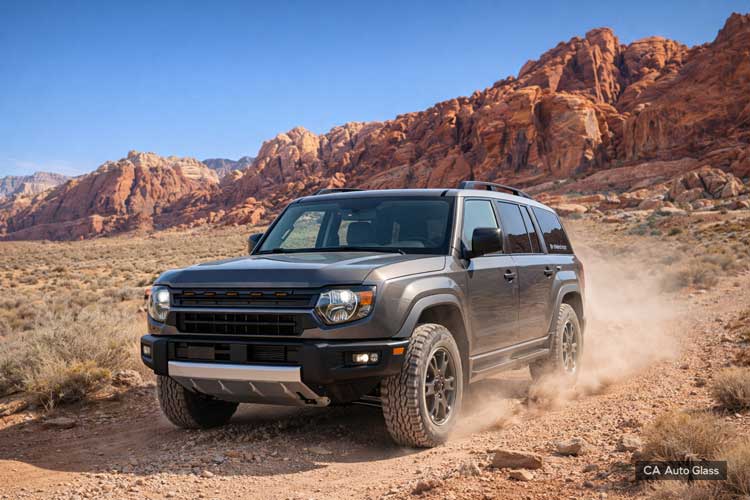
Off‑Road Auto Glass Protection for Las Vegas Drivers: Red Rock & Valley of Fire Trips. Weekend run to Red Rock. Sunrise mission to Valley of Fire. Quick shake‑down on a dirt road off 159.
If you live in Las Vegas or Henderson and love off‑roading, your glass sees just as much action as your suspension. One rock from the vehicle in front of you, one surprise washout, one tight brushy turn—and suddenly that perfect windshield or side window isn’t so perfect anymore.
At CA Auto Glass, we’ve been helping local drivers protect and restore their glass for over 30 years, with 4 convenient locations in Las Vegas plus mobile service. We combine affordable pricing, great quality work, and a team that genuinely prides itself on excellence in auto glass repairs.
This guide is all about off‑road auto glass protection for Las Vegas drivers who love Red Rock, Valley of Fire, and the dirt in between.
Why Red Rock & Valley of Fire Are So Tough on Auto Glass
Rock, sand, and narrow roads
Both Red Rock Canyon National Conservation Area and Valley of Fire State Park are built on rugged, rocky terrain.
- Red Rock’s 13‑mile scenic drive and nearby unpaved routes include rough, rocky surfaces and tight areas where you’re sharing space with other vehicles, cyclists, and hikers.
- Off‑highway driving at Red Rock is limited to designated roads only, and the BLM recommends high‑clearance 4x4s on unpaved routes like Rocky Gap Road because of washouts and narrow sections.
- Valley of Fire’s main scenic roads run through sharp sandstone formations, and the park warns that trails and terrain are loose, sandy, and rough—great for photos, not so great for your glass if you tailgate on gravel.
All of that means more flying gravel, sand, and road debris hitting your windshield, side glass, and back window.
Brutal desert heat
Summer highs at Valley of Fire often top 100°F and can reach up to 120°F, with very low humidity. Desert driving guidance from the National Park Service warns that vehicles need to be in good shape and that roads can be narrow, sandy, rocky, and winding.
That kind of heat and terrain:
- Makes tiny windshield chips spread faster
- Dries out cheap seals and low‑quality adhesives
- Puts extra stress on large pieces of glass during flex and temperature swings
Off‑road driving styles
Off‑road driving tips from groups like Tread Lightly! emphasize staying on designated trails and driving responsibly—but they also recognize that you’re dealing with ruts, washouts, rocks, and sand.
If you’re airing down and bouncing around, your suspension absorbs a lot—but your glass still flexes with the body. Any weakness (a chip, a deep scratch, badly installed windshield) is more likely to fail out there than on a smooth city commute.
The Most Common Off‑Road Glass Damage We See
From local 4×4 rigs and overlanders, we see a few patterns over and over:
1. Pitted and chipped windshields
- Fine sandblasting from years of following other trucks on gravel roads
- Pin‑sized chips that multiply across the driver’s field of view
- Star‑shaped rock chips from stones thrown by knobby tires
Left alone, those pits and chips can turn into long cracks after a single hot day parked at the trailhead.
2. Side window impacts
- Low branches or brush kissing the glass on narrow tracks
- Rocks shot sideways by front tires or other vehicles
- Cargo shifting into side glass on rough terrain
Unlike a laminated windshield, most side glass is tempered—when it breaks, it shatters into small cubes. Great for safety, not so great when you’re 45 minutes from pavement.
3. Rear glass cracks and blowouts
- Rocks bouncing up behind the vehicle
- Tight reversing near rocks or trees
- Torsion from flexing frames on washboard roads
For SUVs, hatchbacks, and trucks with canopies, rear glass is easy to forget about—until dust pours in through a crack all the way back to Las Vegas.
Pre‑Trail Auto Glass Checklist for Las Vegas Off‑Roaders
Before you head out toward Red Rock or Valley of Fire, give your glass a quick once‑over—just like you’d check tires, fluids, and recovery gear. The NHTSA recommends inspecting your vehicle regularly, especially tires, before long road trips; it’s smart to treat your glass the same way.
1. Inspect your windshield carefully
Look for:
- Small chips or “stars,” especially on the lower half of the windshield
- Cracks that reach the edge of the glass
- Distortion or heavy pitting where you look through most
If you can catch your fingernail in a chip, it’s worth asking if it can be repaired before it grows. For help deciding, you can check out our pages on windshield replacement in Las Vegas and auto glass repair options.
2. Check side and rear windows
- Look for small edge cracks around the corners
- Make sure power windows move smoothly—no grinding or binding
- Confirm rear defroster lines look intact (no deep scratches across them)
If anything feels weak in the city, it rarely feels better on rocky washboard.
3. Take care of wipers and washer fluid
Old wiper blades can scratch the glass when they trap dust and sand. Replace worn blades and make sure washer fluid is topped off—you’ll want it after dusty sections.
Smart Off‑Road Auto Glass Protection Strategies
You can’t bubble‑wrap your rig, but you can stack the odds in your favor.
1. Keep more distance on gravel
Most rock chips happen because we’re too close to the vehicle ahead. On unpaved or freshly graveled roads, back off a bit—especially behind trucks with aggressive tires.
This simple habit probably saves more windshields than anything else.
2. Slow down when the surface changes
Desert driving guidance from agencies like the NPS and FHWA emphasizes adjusting speed to match conditions—narrow, sandy, or rocky roads can hide sudden dips, rocks, and washouts.
Slower speeds = less energy when that rock leaves a tire and hits your glass.
3. Consider a windshield protection film
Some off‑roaders install clear windshield protection film (kind of like paint protection film, but for glass). It won’t stop everything, but it can help reduce pitting and tiny chips from sand and small gravel.
If you’re curious whether your vehicle is a good candidate, we can talk you through options when you visit or call.
4. Protect cargo area glass
For SUVs and crossovers:
- Secure heavy gear so it can’t slam into rear glass on steep drops
- Use soft bags or blankets around hard, sharp items near windows
- Avoid stacking gear directly against side glass when you know the trail will be rough
5. Respect designated routes
BLM’s off‑highway vehicle advice in Nevada is clear: stay on designated roads and routes, follow posted signs, and be prepared for remote conditions.
Staying where the road actually is usually means fewer surprise rocks, fewer tight brush squeezes, and less risk to your glass (and your undercarriage).
When a Rock Actually Hits: What to Do on the Trail
Even with perfect habits, off‑roading around Las Vegas means something will hit your glass eventually. When it happens:
1. Stay calm and assess
- If it’s a small chip and not in your direct line of sight, you can usually finish the day and deal with it back in town.
- If you see a long crack, especially one that reaches the edge or runs through your primary view, be more cautious—windshield strength is compromised.
2. Avoid making it worse
- Don’t blast the defroster on max cold or max heat directly at the crack.
- Don’t slam doors—body flex can grow cracks quickly.
- If dust is blowing, you can place a strip of clear tape over a chip (after gently brushing off loose grit) to keep dirt out until repair.
3. Plan your exit route
If the damage is serious, stick to smoother routes out (main scenic drives, maintained gravel) instead of bouncing through tougher lines.
Once you’re back in cell range, give us a shout. Our mobile auto glass repair and mobile auto glass repairs in Las Vegas services can often meet you at home, at work, or near your preferred trail staging area.
How CA Auto Glass Helps Off‑Road Drivers in Las Vegas
We’re not just fixing “commuter cars.” A big part of our work is trucks, SUVs, and trail‑ready daily drivers that see dirt every weekend.
At CA Auto Glass, you get:
- Over 30 years of experience working with Las Vegas heat, desert dust, and local trail habits
- 4 locations across Las Vegas, so you’re never far from a shop if mobile isn’t ideal
- Affordable pricing that makes it realistic to fix damage before it becomes dangerous
- Great quality work with attention to leaks, wind noise, and durability—not just “looks fine from ten feet away”
- A crew that truly prides itself on excellence in auto glass repairs, from quick rock chip fixes to complex replacements
You can see our full range of services here:
- Auto glass services in Las Vegas
- Windshield replacement for heavily damaged glass
- Rear windshield replacement if the trail claimed your back glass
Our Process After an Off‑Road Trip Damages Your Glass
Here’s what happens when you bring your 4×4, crossover, or overlanding rig to CA Auto Glass after a rough weekend:
1. We listen to how it happened
Trail damage tells us a lot—where the vehicle flexed, what hit where, and whether we should look for hidden stress cracks.
2. Thorough inspection
- We check the entire windshield, not just the obvious chip
- Inspect side and rear glass for hairline cracks
- Look at seals, especially if you’ve been in deep dust or washboard sections
3. Honest repair vs. replace recommendation
If we can safely repair a chip or small crack, we’ll say so. If the damage is too large, at the edge, or in the driver’s critical view, we’ll explain why replacement is safer for off‑road use.
4. Quality install for desert conditions
We use high‑quality glass and adhesives designed to stand up to:
- Las Vegas heat
- UV exposure
- Repeated off‑road flex and vibration
Then we give you clear, plain‑language instructions on how long to wait before hitting the dirt again.
Useful Off‑Road & Park Resources (Outbound Links)
These aren’t competitors—just genuinely helpful sites if you use your rig the way it was meant to be used:
- Red Rock Canyon – Official BLM Information Hours, scenic drive details, and recreation info for the National Conservation Area.
- Red Rock Canyon – FAQ & Off‑Highway Vehicle Rules Details on where off‑highway vehicles are allowed and the requirement to stay on designated roads.
- Valley of Fire Scenic Byway – Travel Nevada Overview of the main scenic drive, distances, and tips for visiting Nevada’s largest state park.
- BLM Off‑Highway Vehicle (OHV) Recreation Federal guidance on responsible off‑highway vehicle use and safety on public lands.
- Nevada OHV – “Know Before You Go” Safety Tips (PDF) Nevada‑specific off‑highway safety reminders, including seat belts, helmets, and trail etiquette.
- Tread Lightly! 4×4 Tips Low‑impact driving suggestions to protect trails, your vehicle, and other visitors.
- NPS Desert Driving Safety National Park Service advice on vehicle readiness and driving in hot, rocky desert conditions.
Heading Out to Red Rock or Valley of Fire? Make Glass Part of Your Prep
Your suspension, tires, and recovery gear might get all the attention—but clear, strong glass is what lets you actually enjoy those views and react quickly when the trail gets tricky.
If you’ve got:
- A chip that’s been there “since last season”
- A crack creeping further across the windshield
- Side or rear glass that rattles, looks hazy, or has suspicious lines at the edges
…this is the perfect time to take care of it—before your next run out of town.
You can:
- Explore our auto glass services
- Schedule help from mobile auto glass repair if your rig is already loaded for the weekend
- Request a fast estimate through our site or contact CA Auto Glass to talk things through with a real person
With over 30 years in business, 4 Las Vegas locations, affordable pricing, and a team that genuinely prides itself on excellence in auto glass repairs, CA Auto Glass is here to keep your off‑road adventures clear, safe, and dust‑free—whether you’re cruising the Red Rock Scenic Drive or chasing sunset at Valley of Fire.